Olkhon Island, Lake Baikal
The largest protected island in Lake Baikal, where extraordinary nature meets ancient legends and the distinctive culture of local peoples
Olkhon Island
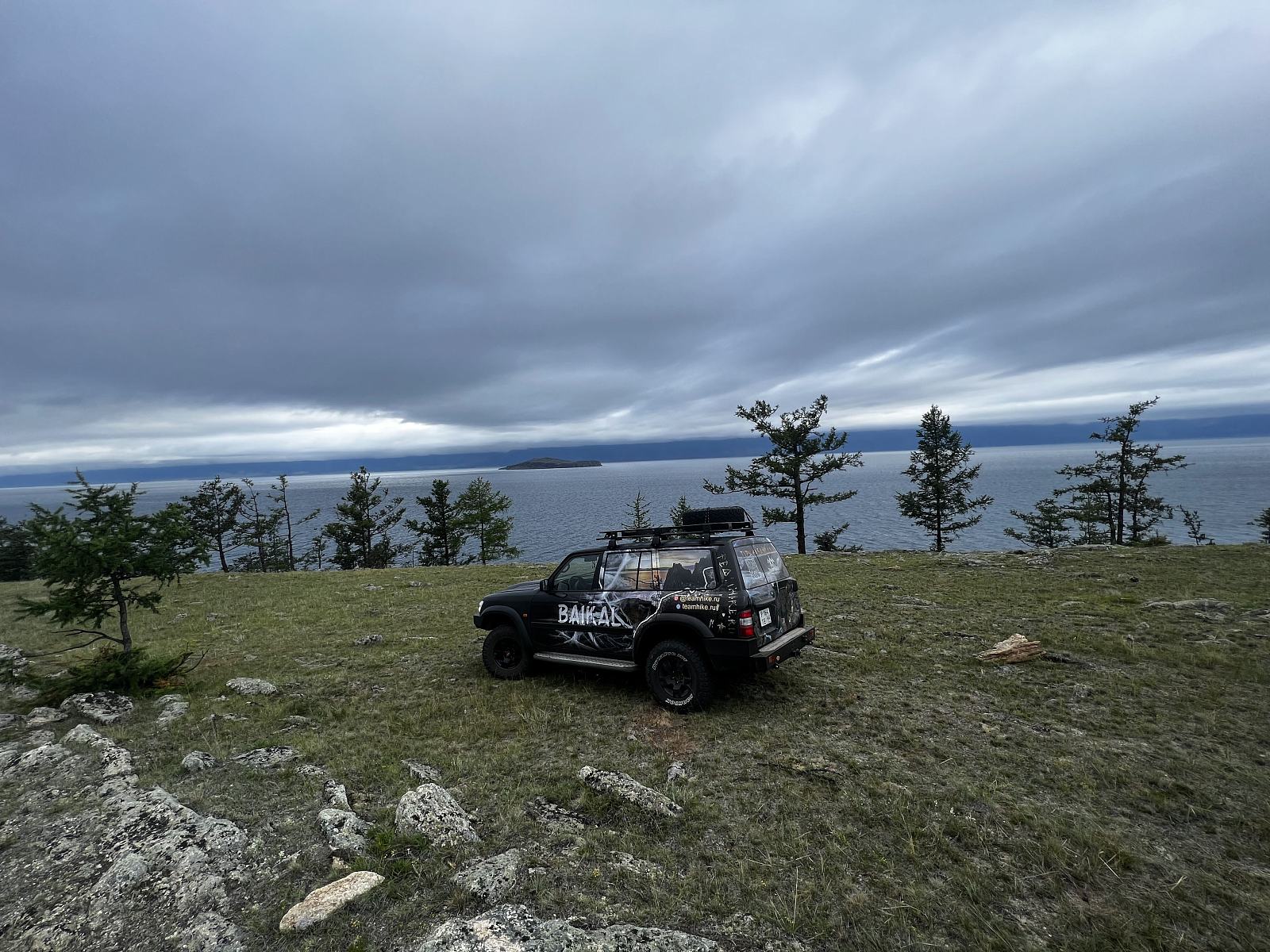
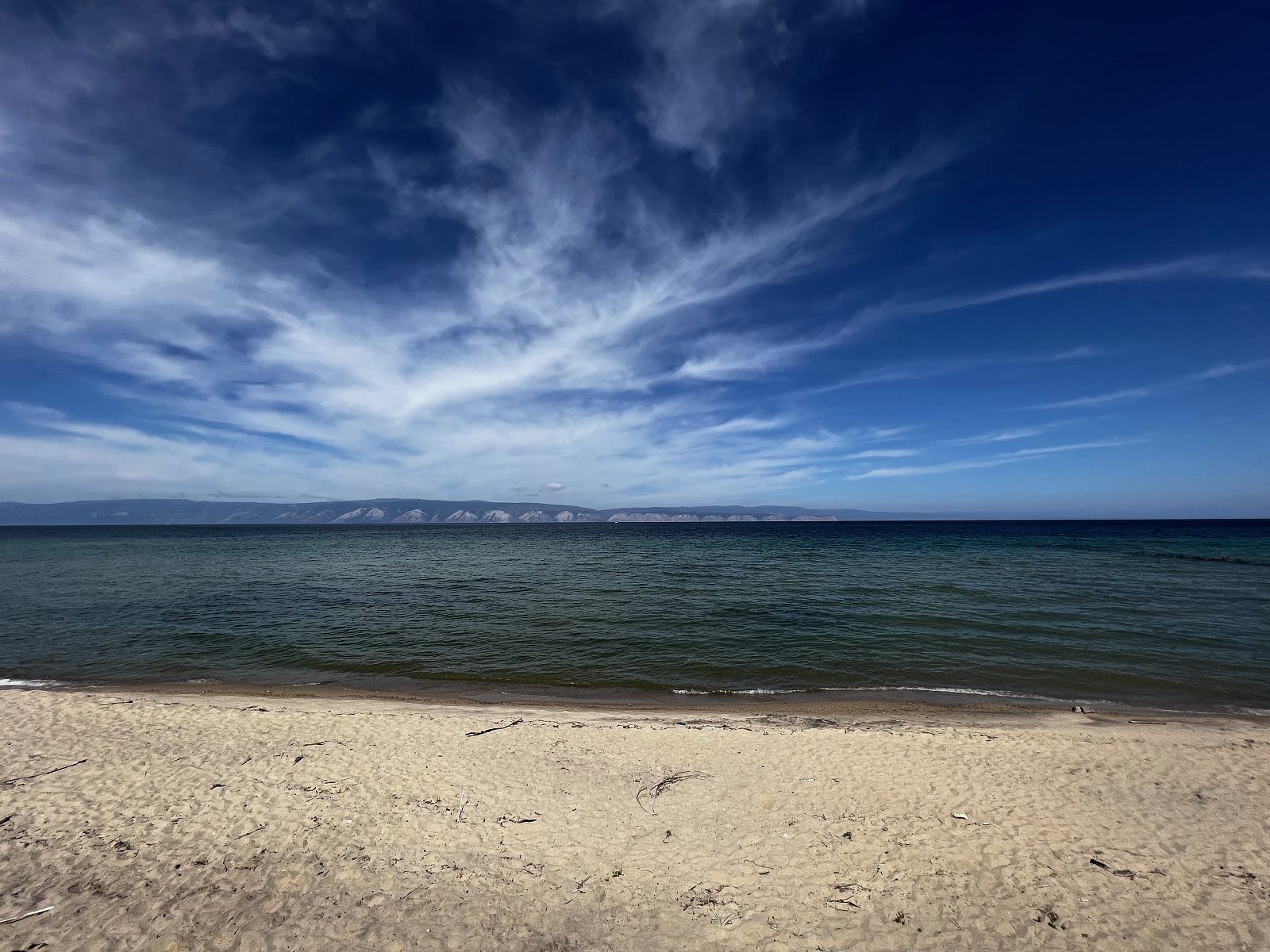
The largest protected island in Lake Baikal, where extraordinary untouched nature intertwines with ancient legends and the local cultures. Its name comes from the Buryat word “oikhon,” meaning “small forest.” There may once have been dense woodland here. Today, Olkhon is known for its scenic cliffs, sand dunes, and crystal-clear water. Protected larch and pine forests remain mostly in the northeastern part of the island.
It is the world’s third-largest lake island, covering an area of 730 km²! Despite its small size, the island is home to a remarkable variety of endemic plants and animals. Bears even make their way here across the spring ice sometimes, though in our experience it happens no more than once every 5–7 years.
Archaeological finds show that people settled here as far back as the Bronze Age and Neolithic period. Most of Lake Baikal’s legends and tales are connected with the island, and its name appears in many folk poems and fairy tales. Olkhon is especially interesting for history buffs: traces of the Kurumchin culture from the 6th–10th centuries can still be found here, including burial grounds, sanctuary towns, and rock art. The people of this culture became the ancestors of modern Yakuts. We highly recommend visiting the local history museum in the village of Khuzhir.
In Buryat mythology, this mysterious island is considered a sacred place. According to legend, Olkhon is the home of Khan Khute-Babai, one of the 13 powerful “sons of heaven.”
The island is steeped in so many mystical legends and stories that its name has come to be associated with mystery itself. At least three island legends mention Genghis Khan, saying that he visited Olkhon and may even be buried here. One Buryat legend tells how Genghis Khan “crossed Lake Baikal on foot near Olkhon Island.” Other tales say that his actual tomb lies deep inside a cave on the island. The tomb is said to hold not only the conqueror’s ashes and immense treasure, but also the so-called “living blood,” which can extend a person’s life to nearly 1,000 years. The most widely accepted theory, however, places Genghis Khan’s burial site in northeastern Mongolia.
What to see on Olkhon
For many visitors, the best place to start exploring Olkhon is one of the island’s main attractions and one of Asia’s great sacred sites: Shaman Rock.
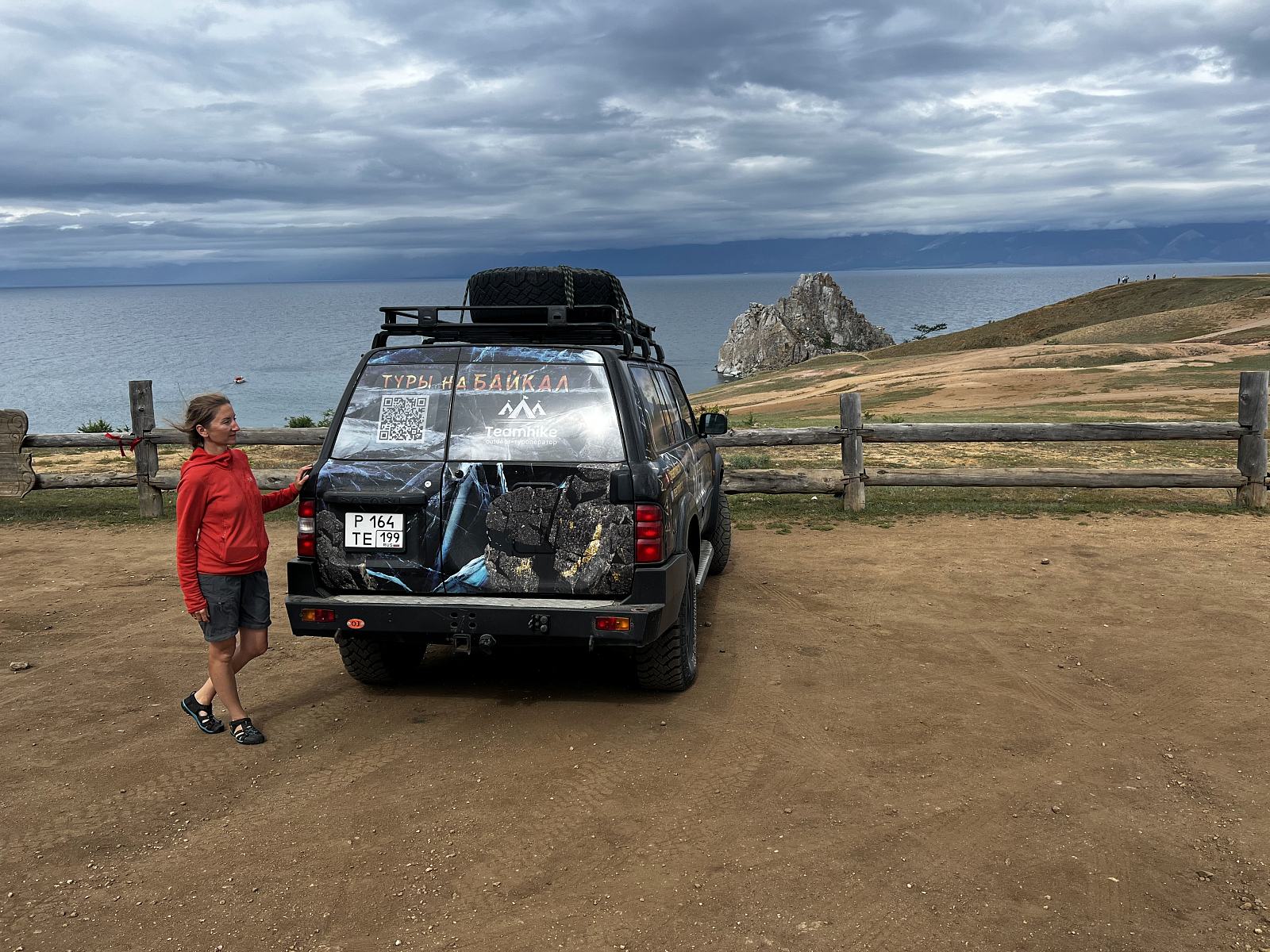
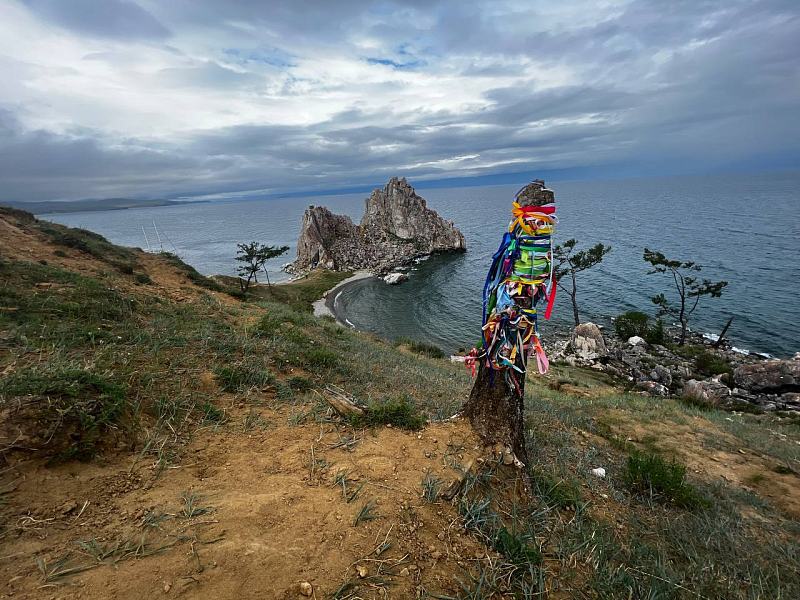
Cape Burkhan and Shaman Rock lie in the middle of Lake Baikal. According to local legend, the spirit of Olkhon Island, Khan Khute-Baabai, lives here. Shamanism began in this place, where its first followers held sacred rituals.
In ancient times, ordinary people never settled near the sacred rock, and women and children were not allowed near the Temple Stone, for fear of angering the gods. The place was believed to be home to evil spirits. Today, many adventurous visitors can approach it and go inside.
For many years, ancient shamans were cremated near the cape. Thirteen ritual serge posts stand here, attracting millions of tourists each year. We’ll tell you more about this place in another article.
The shamanic beach at Saraysky Bay
When choosing a Lake Baikal tour, many visitors hope to see a true natural wonder: a sandy beach lined with twisted trees, many of them around 500 years old. The sight of white sand and unusual trees leaves no visitor to Olkhon Island indifferent.
The village of Khuzhir is the heart of Olkhon Island. In the 1930s, it was a fishing village where everyone made their living from fishing. Today, many tour groups set out from here, including ours. The village has plenty of hotels and vacation bases, shops, cafes, and restaurants. There are also several museums, an art gallery, and a church dedicated to the Sovereign Icon of the Mother of God. Tourism, fishing, and livestock breeding are the main occupations of local residents. The village has an unusually peaceful, quiet atmosphere, far removed from the wider world.
On our tours, we explore both the southern and northern parts of Olkhon. Our route takes in the most interesting spots in the south of the island, which we’d like to tell you about.
Olkhon Gate Strait (south of the island)
Olkhon is separated from the mainland by a narrow strait called Olkhon Gate. Strong winds whip up waves here that can reach 5 meters! In calm weather, visitors can take in the strait’s breathtaking scenery. In summer, ferries cross to the island. In winter, the only safe way to cross the ice is by khivus, a hovercraft. Because of the strong current, the ice here is thin and unstable.
Mare’s Head Cape (south of the island)
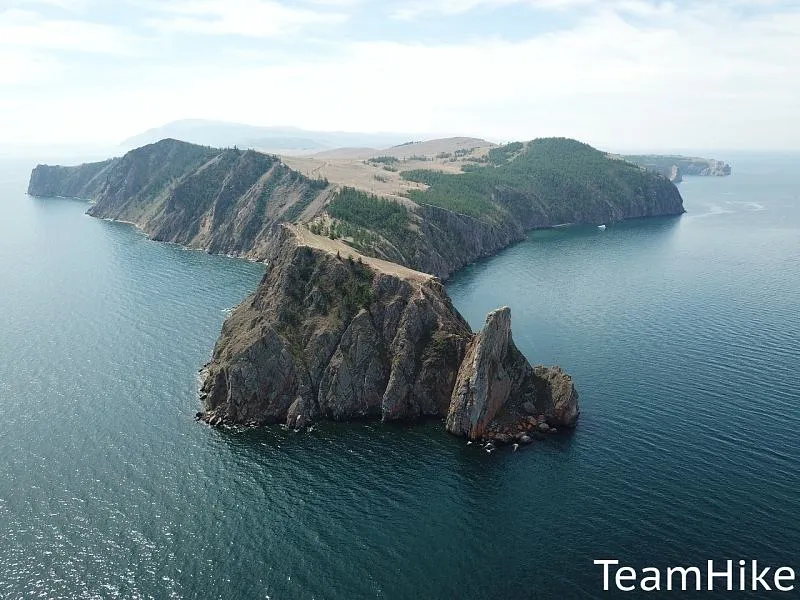
This narrow, hilly peninsula really does look like a horse’s head. Its rocky crevices and sparse vegetation shelter some remarkable plants, while the solitude of the place makes you wonder how life on Earth began. In summer, the cape offers beautiful views of the opposite shore, on the Sarma Gorge side, and of Olkhon Gate Strait. In winter, visitors flock to the cape to see some of the most beautiful ice grottoes and caves.
Lake Nurskoye (south of the island)
The magic of this lake will stay with anyone who visits Olkhon. Local residents sometimes call it Zagli-Nur. In Buryat, “nur” means “lake,” while “zaglagar” means “dense, shaggy, branching.” In summer, you can relax on its quiet shores.
A protected nature reserve lies on the eastern side of the island. Its forested landscape is home to hundreds of ancient trees, and you can admire the mountains rising above the dense forest from a respectful distance. The lake is worth visiting in winter, too. Few people know that it contains methane, which forms beautiful methane bubbles in the ice.
Khula Castle rock formation (south of the island)
Khula Castle is a group of low cliffs covered in bright lime-green lichen that is more than a thousand years old. Climbing up is not easy, but the spectacular view of Mare’s Head and Khul Bay is worth the effort.
Khargoy Pass (south of the island)
One of the highest points on Olkhon. Reach the top and you can feel the power of nature and take in the vast scale of Lake Baikal from above.
Northern Olkhon is also known for its scenic attractions.
Cape Khoboy (north of the island)
At the island’s northernmost point stands a striking rock formation shaped like a sharp fang: Cape Khoboy, whose name means “fang” in Buryat. Locals call the rock the Maiden. According to legend, local gods turned a Buryat woman into stone after she asked them for a palace like the one they had given her husband.
From a certain angle, the cape really does resemble a woman’s silhouette, which sends back a mysterious echo in many voices. Relict grasses grow around the rock, and sandy grottoes lie nearby. We’ve seen some of the most beautiful sunrises here, the kind you can only see on Lake Baikal!
Cape Sagan-Khushun, or Three Brothers Cape (north of the island)
Like many other attractions on the island, this cape is steeped in the mystical atmosphere of Buryat mythology and legends. Its name, Three Brothers, comes from a story about three brothers who set out at their shaman father’s request to find their sister, who had run away. When they found her, she begged them not to tell their father where she was. They kept her secret. When their furious father found out, he turned his sons into three rocks.
Mount Zhima is the highest point on Olkhon Island, rising 1,276 meters above sea level. It lies in the northeastern part of the island, on Cape Izhimey, and is one of Olkhon’s most mysterious places. Visits are currently prohibited because it is within a restricted area of the national park.
Uzury and the “Guardian of Lake Baikal” (north of the island)
Uzury Hollow is considered one of the most scenic corners of Olkhon. There is a weather station here, along with a few small houses. Near the village stands the sculpture “Guardian of Lake Baikal,” created by the renowned sculptor Dashi Namdakov. Hidden from view in the island’s northeastern part, it stands at the foot of Mounts Raba and Talgoy. If you go around Mount Talgoy, you’ll see a magnificent sculpture of a magical tree with a human face. Many bells are tied among its branches. Each breeze sets them ringing in a spellbinding melody.
Sasa Tract (north of the island)
This is one of the few places on the island where snow lingers for a long time. Rare plants have been found here, including dwarf lily and red sarana lily. Winds blowing in from the lake create vast dunes covering around 3 sq. km. They are considered the largest sand deposits on Lake Baikal’s entire western shore.
Peschanka (north of the island)
In the 1930s, the village of Peschanka was a fish receiving station. During the repressions, however, exiles were sent here. There was a forced labor camp (Gulag) here. Traces of this tragic history can still be seen on a tour of the small village.
Cape Nyurgansky (north of the island)
Nyurganskaya Bay lies on Olkhon’s western shore. This unique natural spot is where sand dunes meet the clear waters of Maloye More (the Small Sea). Visitors come to enjoy the untouched scenery and feel the power of the winds from Lake Baikal.
Cape Budun (north of the island*)
The name of this remarkable cape comes from its immense cliffs, where rare crystals such as sapphires and rubies have been found. The area also has a fascinating history. A burial ground dating from the 10th–12th centuries yielded rare artifacts left by the ancient people of Lake Baikal.
When to visit Olkhon
The tourist season on the island is divided into summer and winter. Olkhon has a completely different feel in each season. Here’s another interesting fact about Olkhon: it has a remarkable number of sunny days. In fact, observations show that the weather is sunny here around 300 days a year! This is due to the island’s favorable geographical location and the winds that blow here.
Summer on Olkhon is wonderful! In some bays on the island’s western side, the water warms to +20 to +22 degrees. There are plenty of beautiful, interesting places to explore. You can go stand-up paddleboarding or kayaking, or walk the local trails. The active season starts in mid-July and sometimes lasts until mid-September. Average summer temperatures on Olkhon are +22 to +25, though they sometimes reach +30.
Winter on Olkhon is every bit as beautiful as summer. The winter season is shorter here, but not by much. Peak season on Lake Baikal in winter runs from early February to mid-March. The official ice road opens by mid-February, when it becomes safe to travel across the ice.
Where to stay on Olkhon
There are several large villages on the island with hotels and vacation bases. Khuzhir, Maly Khuzhir, and Kharantsy are the island’s main villages by population, located in its central part. 90% of all hotel accommodation is found here.
In the past, most hotels offered “semi-improved” accommodation, with outdoor facilities. Today, at least half of all rooms have full amenities.