Lake Baikal Ice
Why are Lake Baikal’s ice and water so clear? What makes its ice special, and how does it form? Find out in our article.
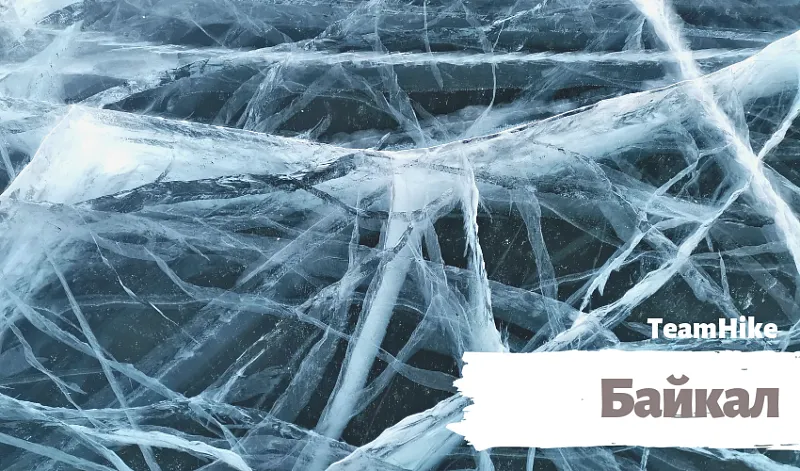
Lake Baikal’s ice is one of its most fascinating and remarkable features. In winter, when temperatures fall below freezing, the lake gradually freezes, forming massive sheets of ice that stretch for kilometers. On our winter tours on Lake Baikal, we show travelers this remarkable sight.
Lake Baikal’s ice is known for its crystal clarity and exceptional transparency. That’s because the lake water contains very few suspended particles or pollutants. The water and ice are so clear thanks to the lake’s unique ecosystem and geographic location. Lake Baikal is the deepest lake on the planet and holds about 20% of the world’s fresh water. Its water comes from numerous natural springs and rivers and passes through a lengthy filtration process, which keeps it clear and transparent.
Lake Baikal is also a nature reserve with strict conservation rules. Industrial and household waste, as well as infrastructure development near the shores, are restricted. This helps preserve the clarity of the water and ice.
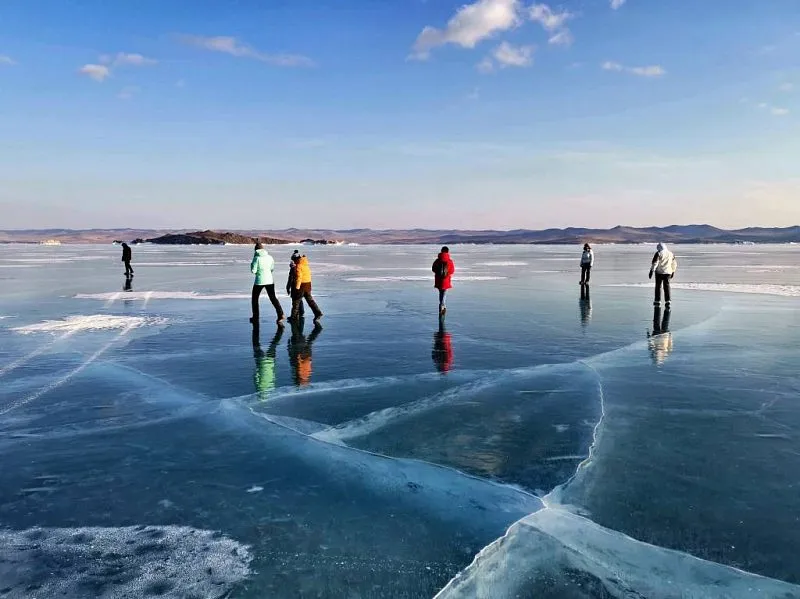
One of the most fascinating things about Lake Baikal’s ice is its texture and structure. The ice sheets take on different shapes and shades, creating striking landscapes. They can be smooth and transparent, like a mirror, or rough, with distinctive patterns and crystalline structures.
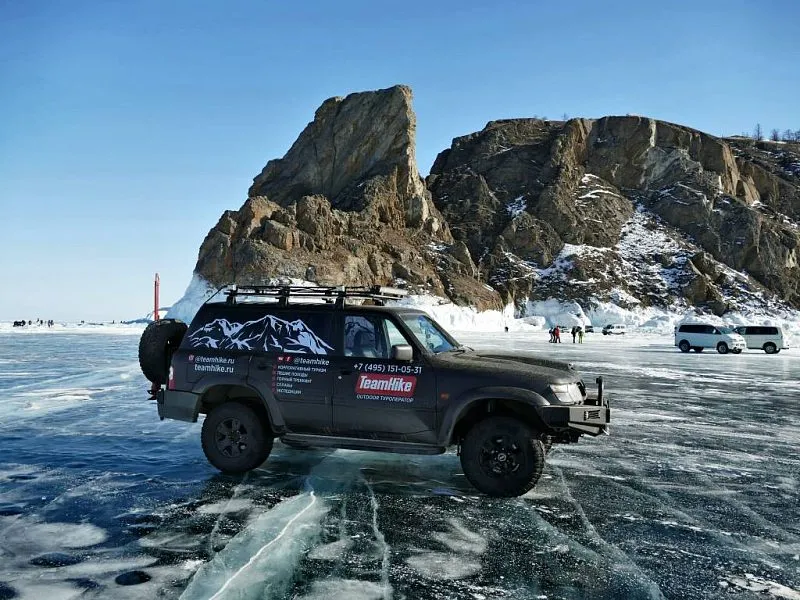
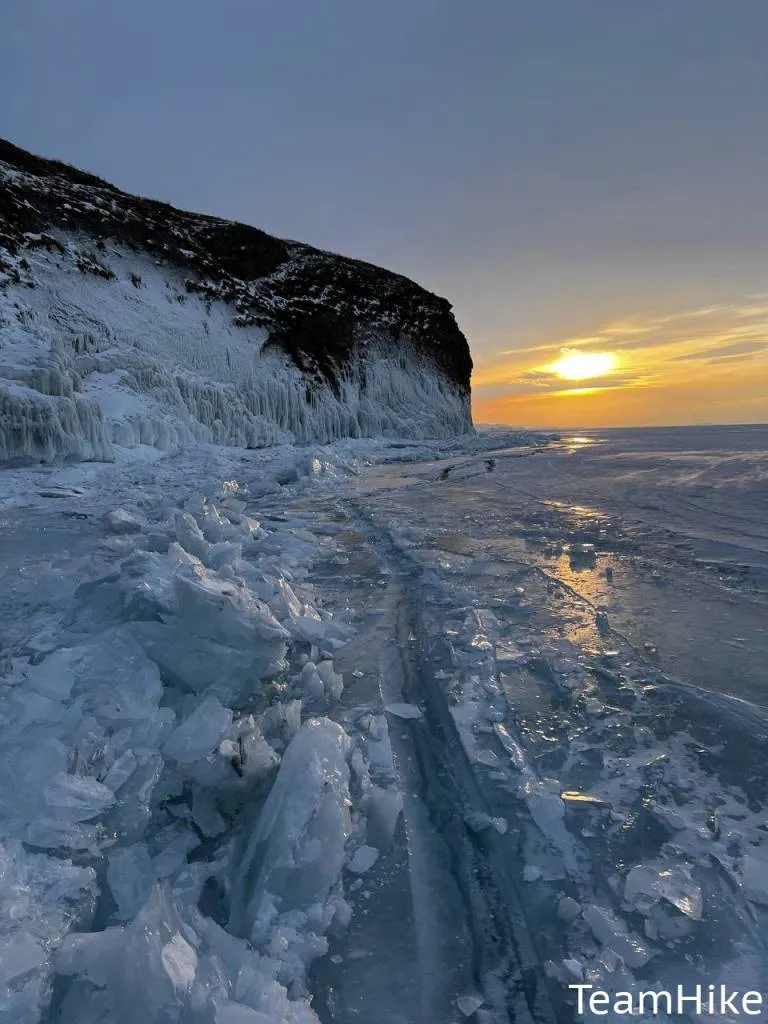
In winter, white splashes of frozen water and icicles form on cliffs and in grottoes. These formations are called sokui. Sokui are splashes of water on rocks that freeze in the early stages of Lake Baikal’s freeze-up, before the lake itself is covered with ice, when air temperatures are already below freezing. They form in shallow areas, where the water quickly cools and freezes close to shore during the first cold spells. Once the ice has formed, waves splash water onto it. As the water freezes, it thickens the sokui and gives it an unusual wavy shape. Strong winds and blizzards can make sokui grow very quickly as wet snow accumulates. Winds on Lake Baikal can be so strong that sokui reach heights of 20–30 meters!
Along the sokui in shallow areas within the surf zone, ice formations found only on Lake Baikal often appear. Called sopki, they look like regular cone-shaped hills up to 6 meters high, made of opaque, porous ice.
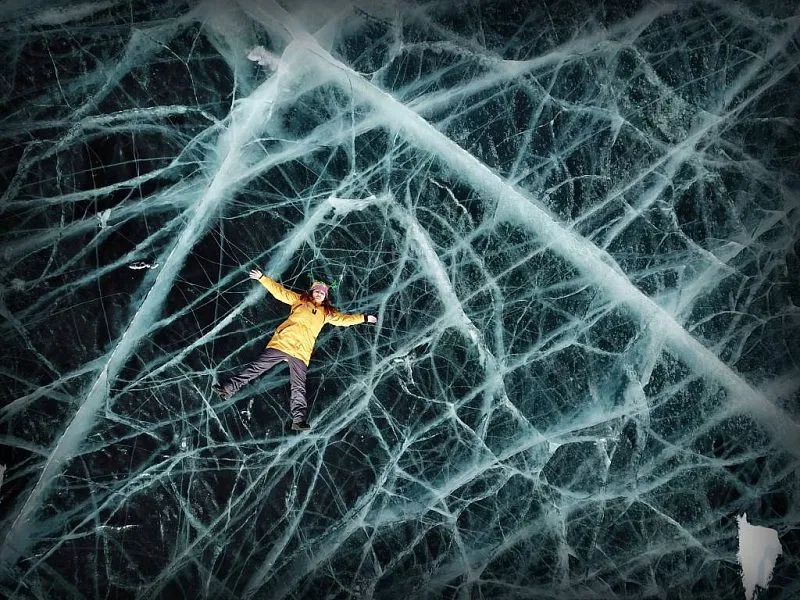
Lake Baikal’s ice also exhibits a phenomenon known as “blue ice.” Under certain conditions, when the ice compresses, it becomes very dense and transparent, taking on a blue tint. This phenomenon is unique to Lake Baikal and creates a striking atmosphere.
Lake Baikal’s ice cover is also vital to the local ecosystem. It shelters many living organisms, including microorganisms, algae, and animals. Some of them can exist only in Lake Baikal’s icy environment.
Lake Baikal’s ice is a unique and remarkable phenomenon that reflects the beauty and clarity of this extraordinary lake.