Seasonal trips
16 photos70,000 ₽ (RUB)


Answer a few questions, and we’ll build an itinerary around your dates, budget, and group size and send you options with prices.
When you don't know what to give someone who loves mountains, rivers, and the open road. Choose any amount, valid for one year. Pick a trip later, together with us.

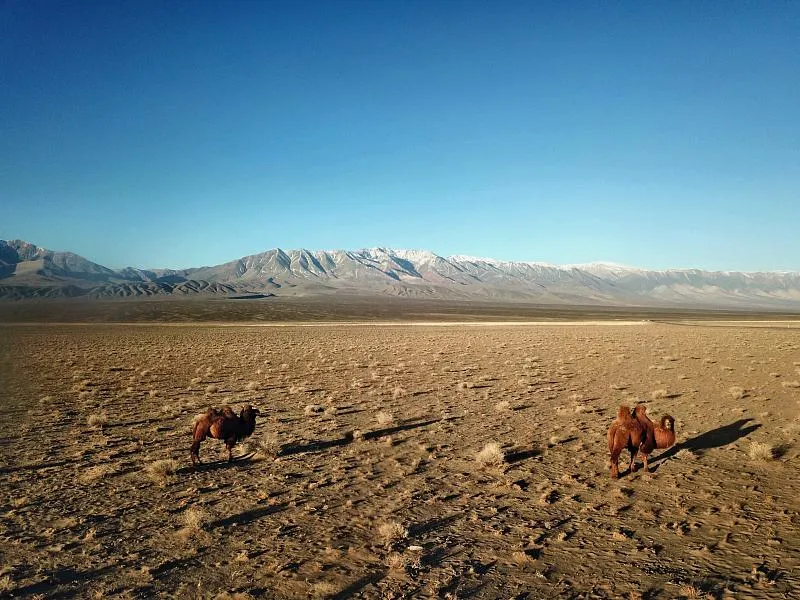
Mongolia's incredible mountains and cliffs, the mysterious Gobi Desert, endless steppes, and the unique culture of its nomads make it one of our best destinations.
We've been traveling in Mongolia since 2016 and have covered thousands of kilometers!

The capital and heart of Mongolia, home to almost half the country's population. The city sits on the banks of the Tuul River at an elevation of 1,300–1,350 meters above sea level. Its population is about 1.5 million. Notably, more than half of its residents are under 30. Today, Ulaanbaatar is a modern, rapidly developing city. It is home to a major railway hub, built with the direct involvement of the USSR and, later, modern-day Russia, as well as road and air hubs. Ulaanbaatar is set to become an important link in growing economic ties between Russia and China.
The city was founded in 1639 under the name Shireet Tsagaan Nuur. It later went by the names Urgoo, Nomyn Khuree, Ikh Khuree, and Niislel Khuree before becoming Ulaanbaatar. “Ulaanbaatar” means “red hero”; the city received this name during the socialist era. The city began to grow rapidly in the mid-20th century. Its pace of development in the 2010s is also worth noting. During this period, the city saw a massive influx of people from rural areas, more than doubling its population. Today, Mongolia's capital is a modern metropolis.
Ulaanbaatar is the coldest capital city in the world. Its winters are extremely cold, and temperatures often drop below -40 degrees. The city has a thriving industrial sector, including factories, facilities that process animal products, meatpacking plants, metalworking and woodworking businesses, and food-processing companies.
What to see in Ulaanbaatar
Gandan Monastery
The city is home to many Buddhist monasteries. Gandan Monastery (Gandantegchinlen) holds a special place among them. Its name means “Great Vehicle of Complete Joy.” Several monasteries in Mongolia once bore this name, but the one in Urga, where Buddhist theology was taught, was the best known in the Buddhist world. This extensive religious complex is close to the city center. The unique temple complex was built in the late 18th and early 19th centuries.
The temple's greatest treasure is a 26-meter statue of the bodhisattva Avalokiteshvara. Made of copper and covered in gold leaf, it is decorated with 2,228 precious stones, some of which were found in Mongolia. The temple grounds also feature a “wish-granting pillar” and many other remarkable architectural monuments, most of them made of wood.
Museums
The city has several museums. In our opinion, the must-sees are the new Chinggis Khaan Museum, which opened in 2023, and the National Museum of Mongolia.
The world's largest equestrian statue stands 40 km from Ulaanbaatar. It depicts Chinggis Khaan and is part of a museum complex. The lower floor features a large exhibition, including multimedia displays, on the conquests of the great descendants of Chinggis Khaan.
Sukhbaatar Square
Ulaanbaatar's central square is always lively, with ceremonies, public celebrations, concerts, exhibitions, festivals, and sales. An ice town is built here during cold winters. Weekends are the best time to visit, especially if your trip coincides with a local holiday. The Government Palace of Mongolia is also on the square.
Naran Tuul Market
Mongolia's largest market. For visitors, its main draw is the wide selection of antiques and shamanic items, well-known leather and fur goods (especially footwear), and products made from Mongolian wool, including the famous Mongolian cashmere. Prices here are much lower than in souvenir shops.
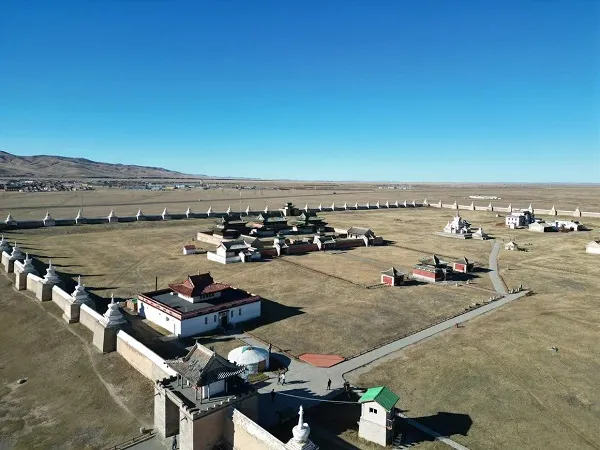
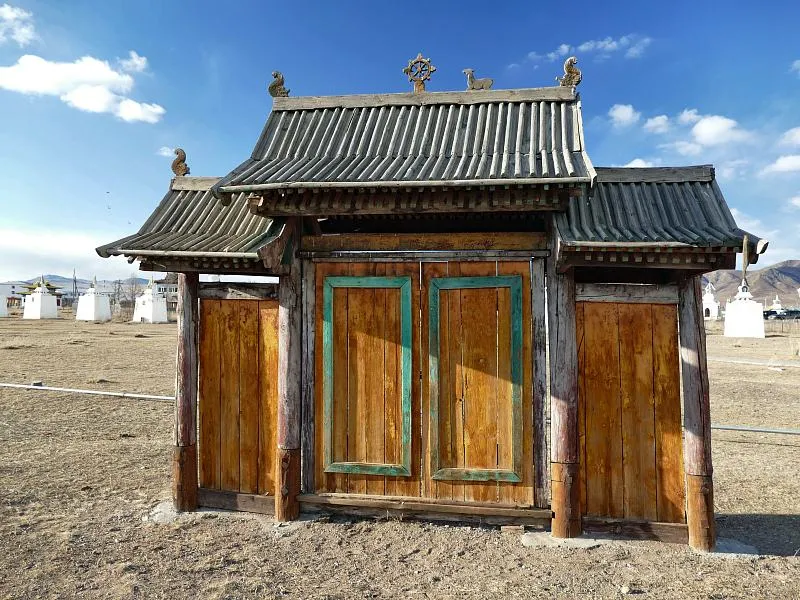
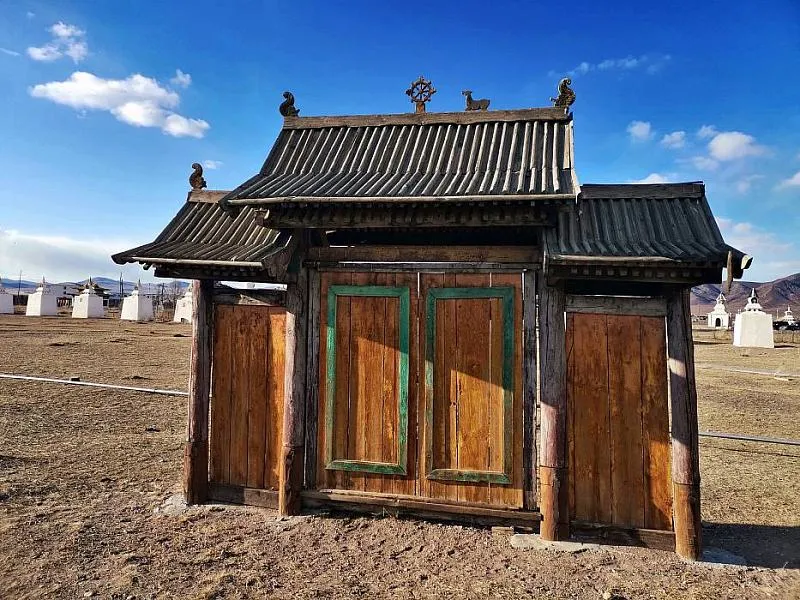
The ruins of Mongolia's ancient capital, Karakorum, lie in the Orkhon River Valley. For a thousand years, this area was the cradle of a powerful nomadic empire. The UNESCO World Heritage cultural landscape includes the breathtaking Erdene Zuu Monastery, surrounded by 108 stupas. Anyone who wants to follow the story of Mongolia's rise and development should visit this place. Since summer 2023, a large visitor area with cafes, restaurants, and souvenir shops has been taking shape near the complex.

One of Mongolia's largest nature parks. It is only 40 km from Ulaanbaatar. The park's southern section has a large visitor area with cafes and hotel complexes. The park's remarkable landscape combines forest and mountains, with unusual shapes and many striking rock formations. One of the best-known formations is called Turtle Rock. Gorkhi-Terelj National Park is also known for its many rare animal and bird species.

The Gobi Altai is a mountain system in Mongolia that runs across much of the country from west to east. As the name suggests, these mountains are closely connected with both the Gobi Desert and the Altai Mountains. Geographically, the range continues the Mongolian Altai, separated from it by the Alag Nuur Basin. Starting in the country's southwest, the Gobi Altai ranges follow the southern border with China, gradually disappearing into the sands of the Gobi, one of the world's largest deserts. The Gobi Altai stretches almost 1,000 kilometers to the southeast. In the west, its highest point is the 3,957-meter Ikh Bogd Uul massif. The elevations gradually decrease to the east, giving way to rolling terrain. Near the city of Dalanzadgad in the east, the Gobi Altai breaks up and eventually disappears altogether, giving way to the Great Gobi, one of the world's largest deserts. The Gobi Altai forms a boundary between two of Central Asia's largest deserts: the Gobi Desert to the northeast and China's Alashan Desert to the southwest.
The mountains are undoubtedly one of Mongolia's most iconic features. On our trips to the mountains from Dalanzadgad, we visit several beautiful gorges, including Yolyn Am.
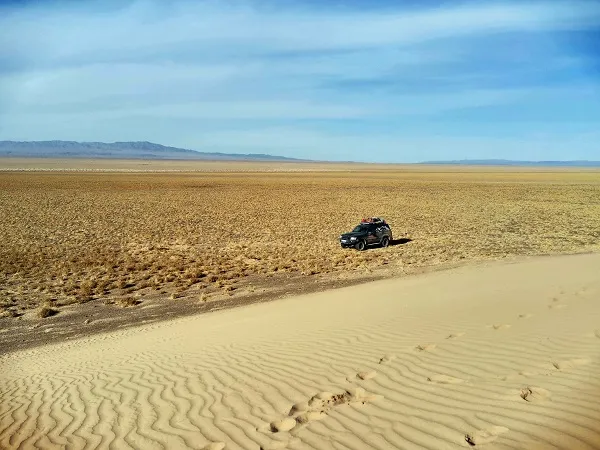
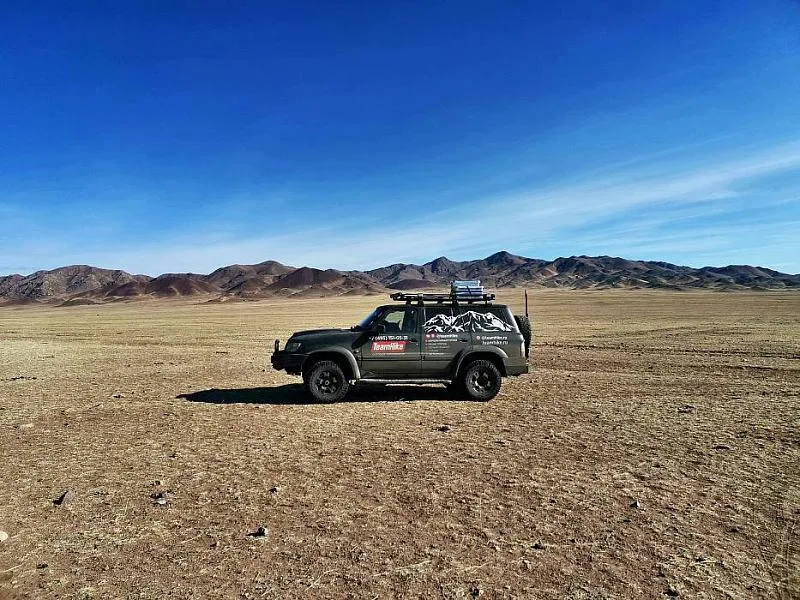
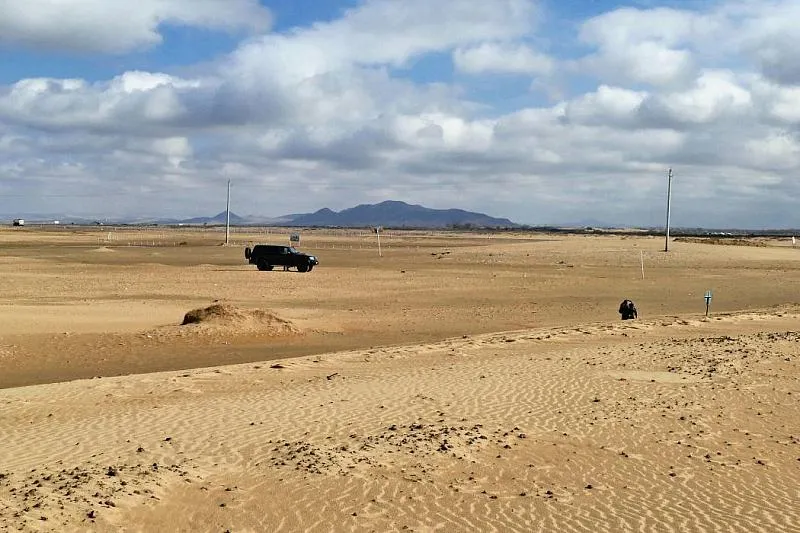
Gobi means “waterless place,” though it rains quite often in the desert's northern part. In the Mongolian Gobi, you can feel as if you've landed on another planet. Hills formed from the silt of an ancient sea and Cretaceous-period salt seem to blaze at sunrise and sunset.
The Gobi Desert has preserved countless dinosaur fossils. Many are so small that you could walk right past them, mistaking them for branches of saxaul, a desert plant found throughout the Gobi. It may look lifeless and dry, but it can come back to life after a night of rain. On our tours, we often come across fossils, usually in the “dinosaur graveyard” at Bayanzag.
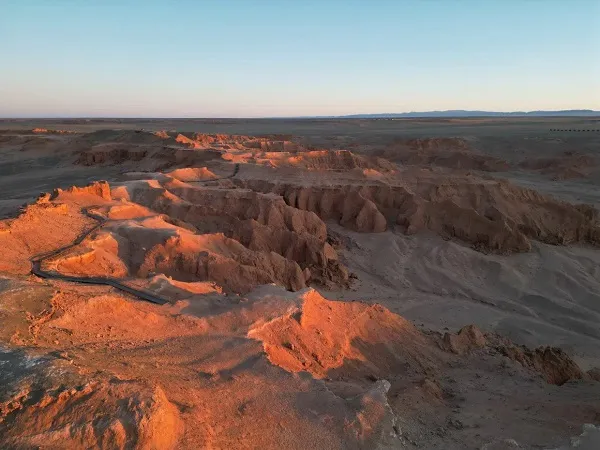
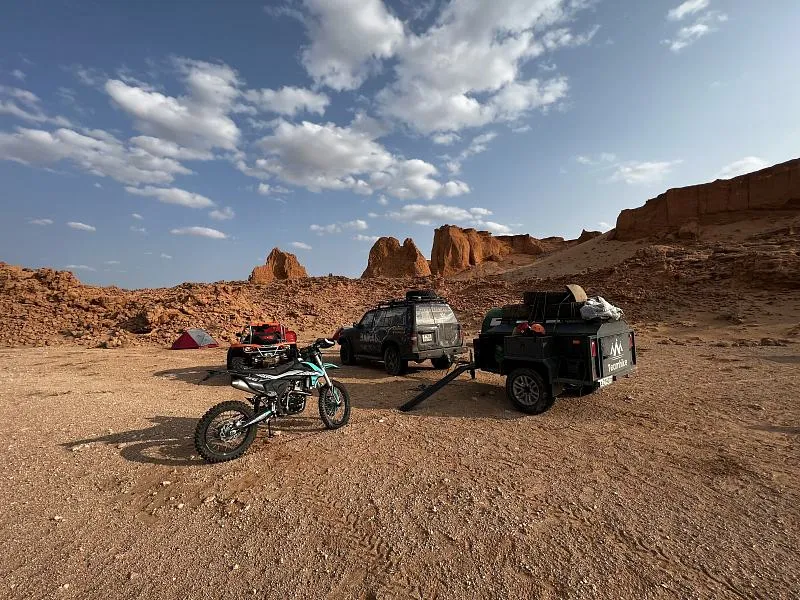
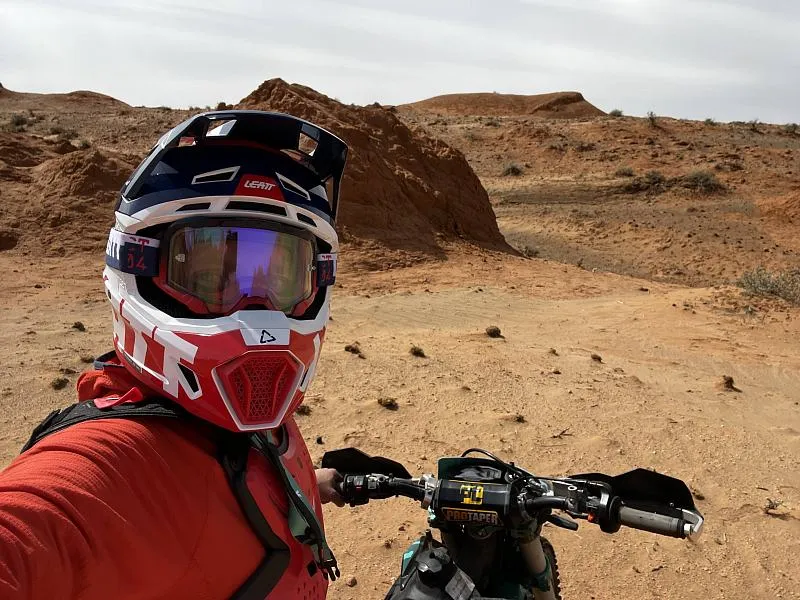
This place made the Gobi Desert famous around the world. In the early 20th century, a scientific expedition led by an American explorer discovered ancient dinosaur eggs and the skeleton of a giant rhinoceros, and identified the psittacosaurus. The Bayanzag cliffs stretch for 8 km through the valley of the Arts Bogd mountain massif. They are known as the Flaming Cliffs because of their striking appearance at sunset. The bright orange rock seems to glow and burn in the evening light, leaving visitors awestruck. In 2023, the main area was closed to unrestricted access. A well-maintained walking trail was built, and an admission fee was introduced. The area is also unique because you can still find many fossils from the age of the dinosaurs nearby.
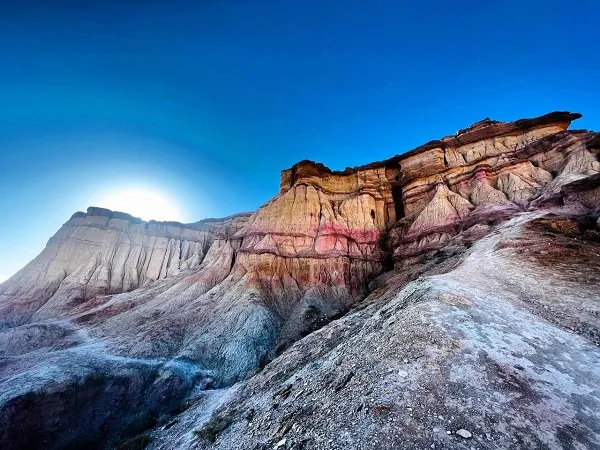
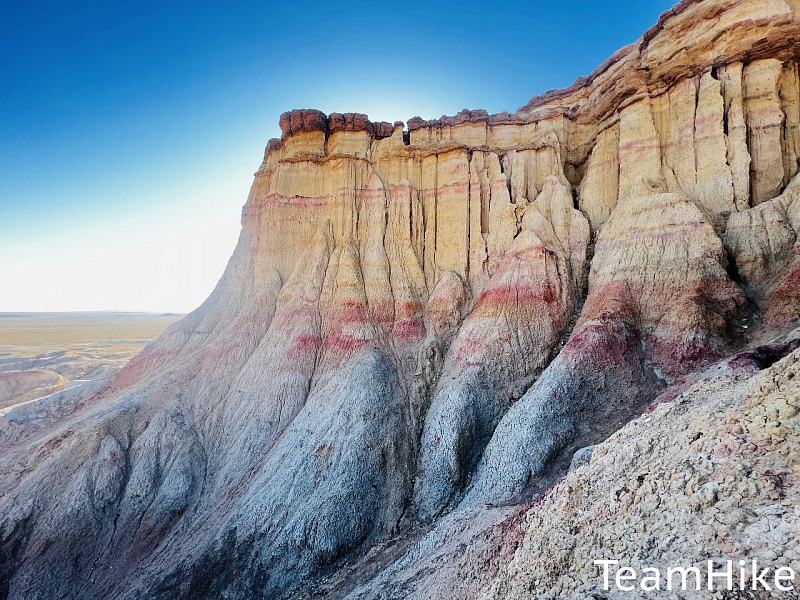
A truly unique and extraordinarily beautiful place in Mongolia. This natural formation looks like the ruins of an ancient city. It reaches 30 meters high and stretches for about 400 meters. During a heavy rainstorm, water runs down its vertical walls like a giant waterfall. It's a fascinating place full of character. The cliffs' colors make you think they could be from another world. Most of our travelers who visit believe Tsagaan Suvarga deserves a place among Mongolia's top destinations. It really is incredibly beautiful!
Not many tourists come here yet, even though it's no harder to reach than Bayanzag.
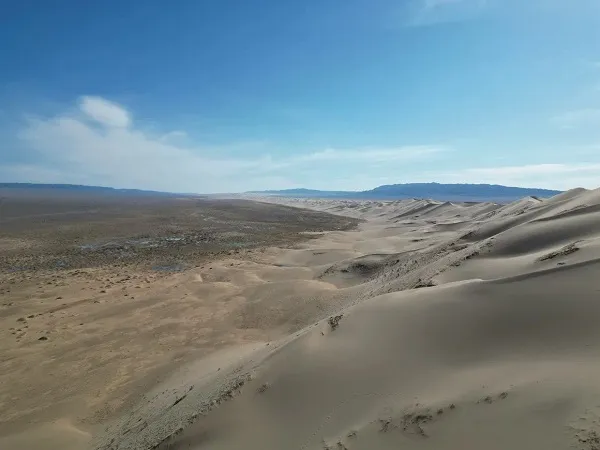
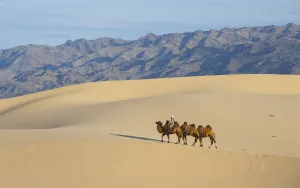
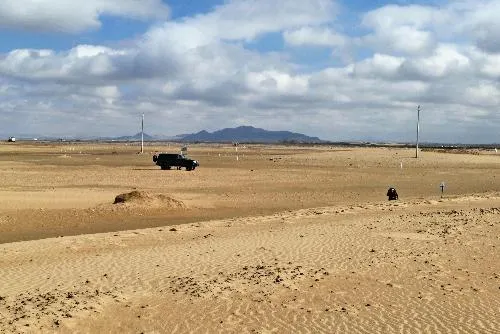
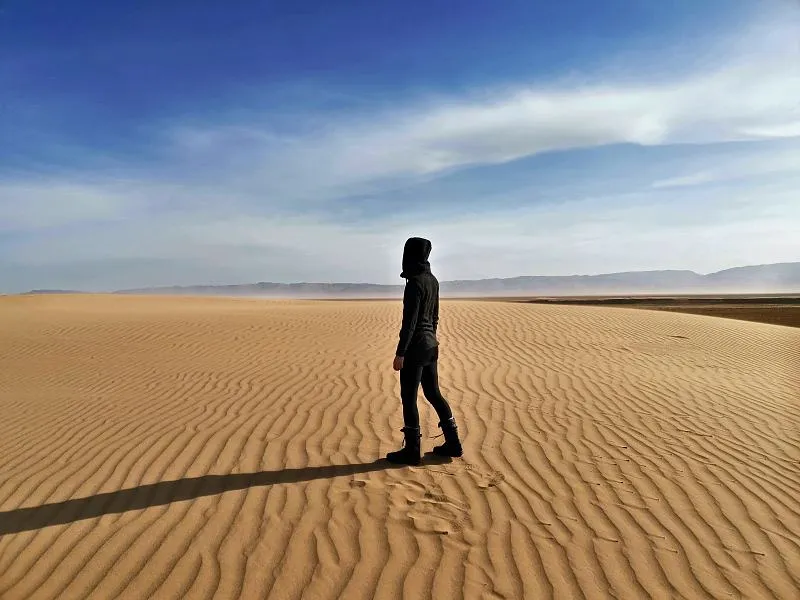
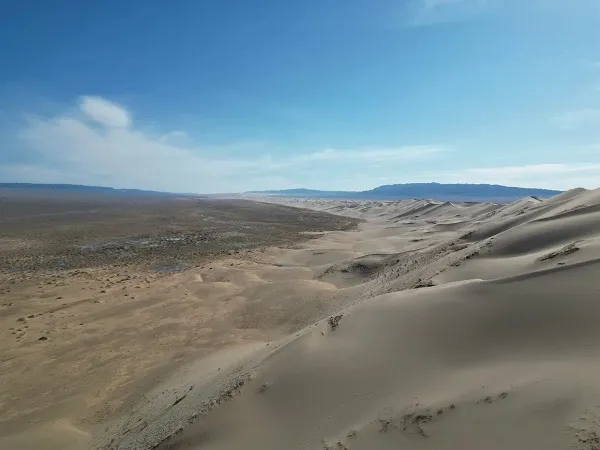
Another of our favorite places in Mongolia. The Khongoryn Els sand dunes stretch from northwest to southeast. At their widest, they are almost 30 km across and cover a total area of 965 square kilometers. In places, the dunes reach 200 meters high. Climbing them is not difficult because the sand is very compact, and the descent feels like skiing down a mountain.
Recently, many yurt-style hotels and cafes have opened near the entrance. The main viewing area hosts a festival with traditional Mongolian competitions and celebrations.
The southern part of the dunes is rocky and mountainous, the center is completely bare, and the northern part surprisingly hides several oases. On a windy day, blowing sand can make it impossible to see anything around you. In calm, sunny weather, though, the dunes glow beautifully in the sunlight. A large section of the Khongor dunes is known as the “singing dunes.” The sound is extraordinary. As grains of sand slide down the slope, they create a low hum, like an organ, that can be heard several kilometers away. A number of fascinating local legends attempt to explain this natural phenomenon.

An endless steppe stretches across eastern Mongolia. It has becomehome to many nomadic groups, including Khalkha Mongols, Dariganga, Zakhchin, Buryats, and Oolds. They are proud to live on the Dariganga Plateau, the homeland of Chinggis Khaan. The endless grasslands here are rich in wildflowers and grasses, and thousands of horses, gazelles, and other animals graze across them. This is where the great Chinggis Khaan once watched the sunrise. These were his favorite places, and he often returned here during his lifetime.

This part of Mongolia is a unique blend of steppe, taiga, tundra, and mountains. It is home to many ethnic groups that have lived side by side for centuries, including many peoples who also live in Russia. Rich in wildlife and ethnic diversity, western Mongolia has a long tradition of bi biyelgee dancing, throat singing known as khoomei, and playing the tsuur flute, all passed down from generation to generation. The Altai Tavan Bogd Mountains, the twin peaks of Kharikhiraa and Turgen, and Lake Uvs are all in western Mongolia. We sometimes visit these places on our trips, usually when entering or leaving through the area bordering the Altai Republic. They are truly beautiful and full of character!

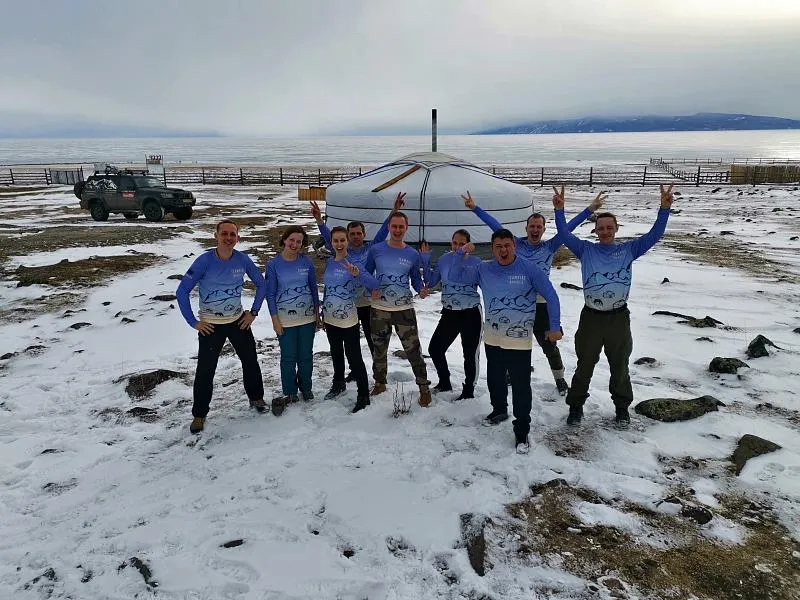
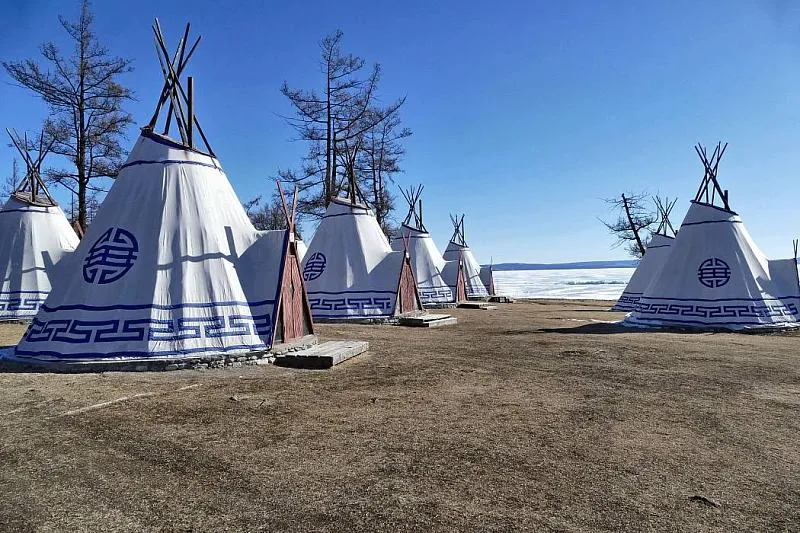
Lake Khuvsgul, the “younger brother” of Lake Baikal, is known to Mongolians as “Mother Sea.” It is about 2 million years old and holds 0.4% of the world's fresh water. The lake reaches a maximum depth of 262 m, far less than Lake Baikal, though the two lakes lie in the same tectonic rift. Lake Khuvsgul is Mongolia's deepest and largest freshwater lake. Despite the cold, it draws visitors even in the harsh winter, though not nearly as many as Lake Baikal does in winter. Like Lake Baikal, it hosts an annual Ice Festival. The ice on both lakes is much alike: crystal clear and beautiful. The lake is just as lovely in summer, when many visitors come to relax and fish to their heart's content.
Lake Khuvsgul is Mongolia's very own blue pearl!
This is, of course, far from the full list of Mongolia's attractions and beautiful places. Other highlights include Khustai Nuruu National Park, the extinct Khorgo volcano, the Nemegt and Altan Mountains, and many other remarkable places. We'll publish guides to each of these places, as well as the ones mentioned above, in separate articles. Mongolia is only now beginning to open up to tourists, and we're happy to be part of it!
We'll call to confirm the occasion and amount, then email your certificate or print it on paper.
Thanks, we got your request.
We'll call during business hours: 9:00 am–9:00 pm, every day.