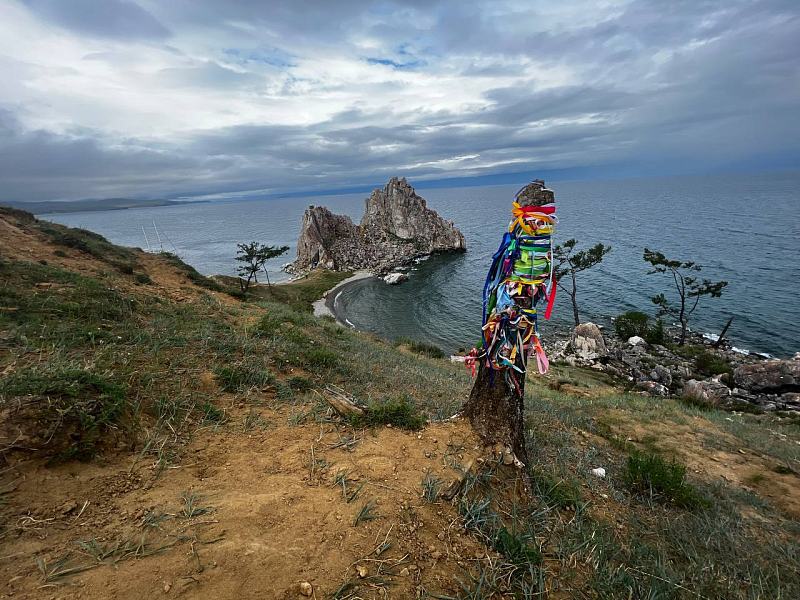
Mendeleev Volcano, Kunashir Island
Fumarole fields, mineral springs, Kuril bamboo thickets, and stunning views — this is what Mendeleev Volcano on Kunashir Island is known for
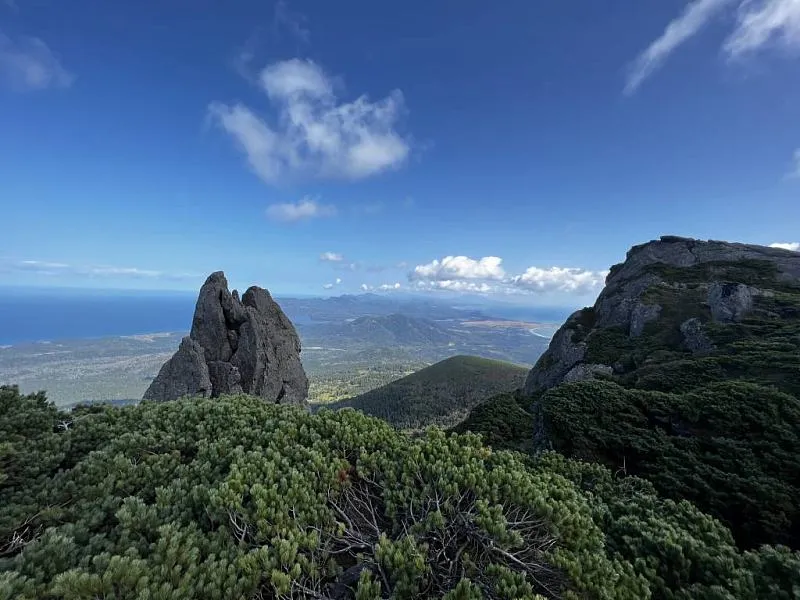
Mendeleev Volcano is an active volcano 865 meters high in the southern part of Kunashir Island, in the Greater Kuril Range. The landmark was named after the famous Russian chemist D. I. Mendeleev in 1946. Local residents also call the volcano the “sleeping beauty” because, viewed from a certain angle, its outline resembles a reclining woman. Mendeleev Volcano is recognized as a natural monument of federal significance.
According to scientists, Mendeleev Volcano formed more than 200,000 years ago. Geological studies show that it has undergone a long and highly complex development. The volcano formed in three stages, as evidenced by three volcanic cones that formed and were destroyed by eruptions. The volcanic vent is surrounded by a large caldera, which also formed when erupting material subsided. Picturesque Mendeleev Volcano is one of the most popular attractions on Kunashir Island. On our tours to Kunashir Island, we always introduce travelers to this unique place.
The volcano is known for having the island’s largest fumarole fields. Fumaroles are openings in craters that release hot gases. They cover a fairly large area here and vary in size and shape. Acrid smoke pours from each opening, ranging from a few millimeters to a meter in diameter. The gases here include sulfur vapors, which is why the area is also called the solfatara fields. The release of volcanic gases through fumaroles indicates that the volcano has entered an intermediate stage between eruptions and dormancy. On the fumarole fields, you can feel the volcano breathing.
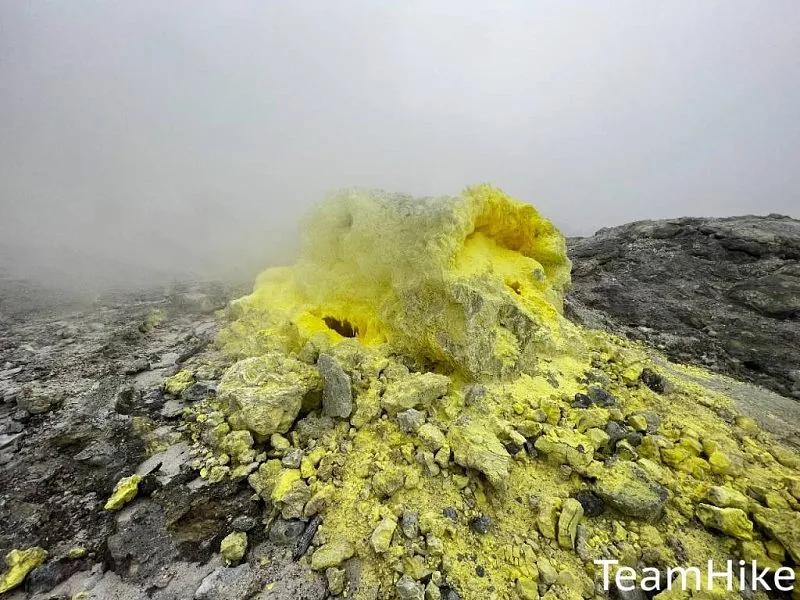
Tourists are also drawn to the bright yellow deposits of native sulfur on the fumarole fields. Inside the cavities where gases escape, the sulfur deposits can reach several dozen centimeters in thickness. Where the gas escapes slowly, sulfur forms beautiful branching crystals. It is a truly unusual sight.
Kisluy Stream begins in the solfatara field of Mendeleev Volcano. Geothermal springs with water temperatures of 90 degrees are found along the stream. The spring water is siliceous, highly acidic, and sulfate-chloride. The stream got its name from mineral impurities with a slightly sour taste.
Several more hot springs can be found elsewhere on Mendeleev Volcano, on its slopes and at its foot, with steam rising everywhere. Numerous outlets of mineral and thermal sulfurous waters attract many tourists.
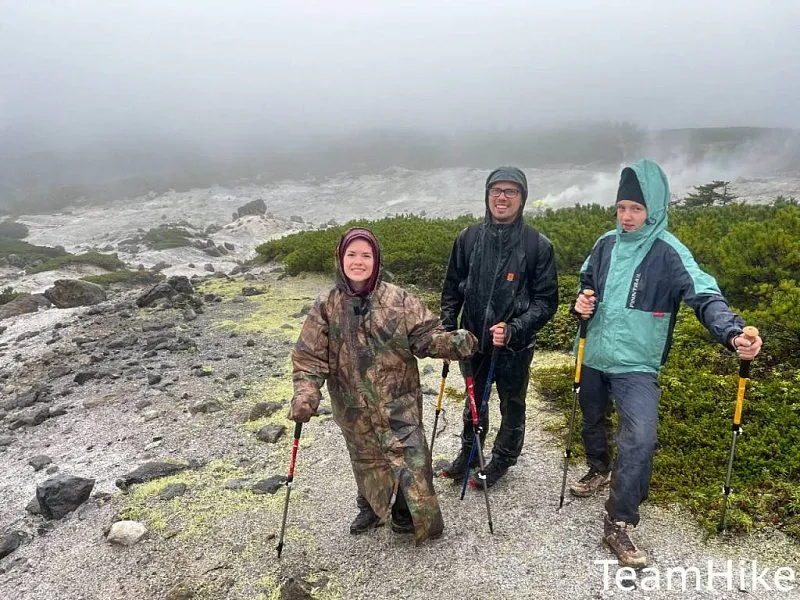
The slopes are covered with mixed coniferous and broadleaf forests, with dense undergrowth of Kuril bamboo and Siberian dwarf pine. The ascent to the volcano follows a scenic trail, mostly through dense Kuril bamboo, and takes about 3–4 hours. You can also see vines, trees with unusually large leaves, and numerous flowering plants that give the area a subtropical feel.
The wildlife is diverse as well, including brown bears, chipmunks, and weasels. The slopes are also home to the Far Eastern skink, a lizard found only on Kunashir Island.
Fumarole fields, mineral springs, Kuril bamboo thickets, and unique nature — you can see all of this while climbing Mendeleev Volcano. From the summit, travelers can enjoy an otherworldly view of the whole of Kunashir Island. To learn more about Kunashir Island’s other remarkable places, read our feature.