Golovnin Volcano, Kunashir Island
Scenic lakes, lava domes, hot springs, unique views, and dense forests — Golovnin Volcano has amazed visitors with its beauty for many years
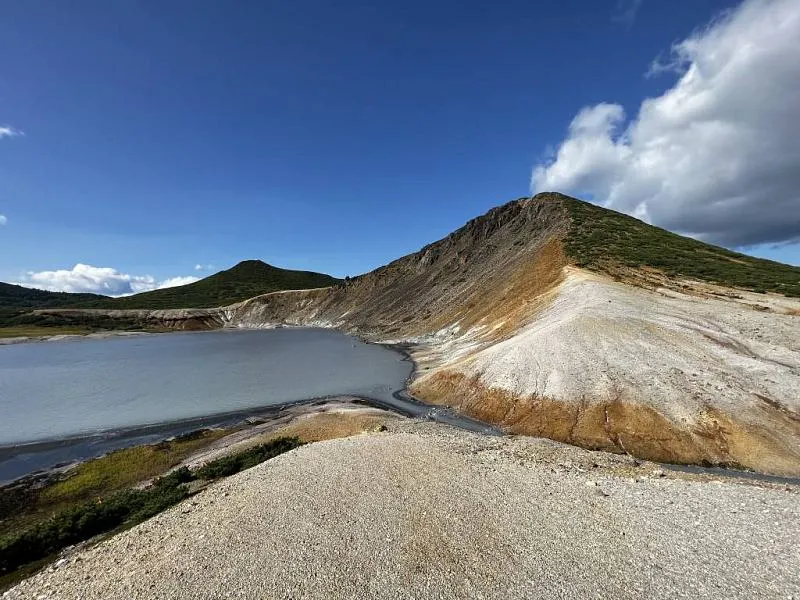
Active Golovnin Volcano is the oldest volcano on Kunashir Island (it is 39,000 years old!). It is also the southernmost volcano in the Kuril Islands. This natural landmark is a vast volcanic basin more than 540 meters high, surrounded by a ridge. It was named after the navigator V. M. Golovnin, who was captured by the Japanese near this volcano in 1811. From the volcano's heights, travelers can enjoy unique panoramic views of the surrounding area. Golovnin Volcano is traditionally one of the main locations on our tours to Kunashir Island.
One distinctive feature of this volcano is the absence of a clearly defined cone. The cone was destroyed by a gigantic explosion thousands of years ago. All that remained was a ring of mountains — the caldera. During subsequent eruptions and periods of increased activity, new cones began to form on and around the floor of the caldera. The Golovnin Volcano caldera is about 5 km in diameter and remains unique because of its ongoing volcanic activity. The caldera contains two explosion craters and 4 small volcanic domes on its floor.
Inside the caldera, at an elevation of 130 meters above sea level, are the unique Hot Lake and Boiling Lake (each in its own crater!). They are known for active fumarolic vents located very close to each other. Because of the large number of boiling-water springs emerging from underground, the lake water becomes extremely hot, reaching up to +80°C. Jets of hydrogen sulfide and sulfur gases — solfataras, hot-water eruptions, thick steam, and constantly changing water colors create an incredible scene here!
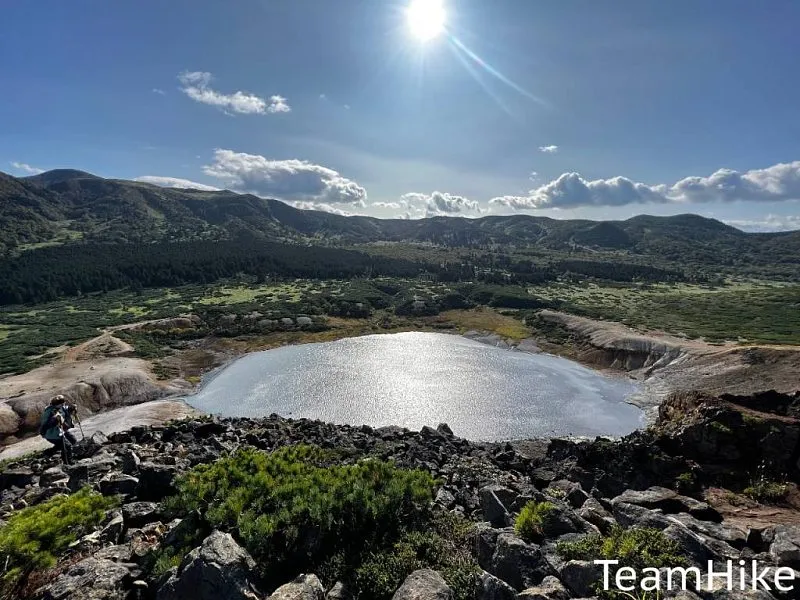
Boiling Lake is associated with numerous hydrothermal vents. The water literally boils because of the many gas bubbles. According to scientists, the lake formed as a result of volcanic activity. Molten magma came into contact with a large amount of cold seawater, and the explosion formed a crater about 350 meters across that later filled with water. A two-meter mud pot called Devil's Frying Pan by the locals is located here. The water and mud of Boiling Lake are considered healing, although swimming here is dangerous because of the fumes. Notably, the Japanese mined sulfur here at the beginning of the last century, when Kunashir Island was under Japanese control.
Hot Lake, which also formed in the volcano's crater, is suitable for swimming. It covers one-third of the volcano's entire caldera, and it is quite deep, reaching 62 meters. Hot Lake is characterized by suspended sulfur particles that give the water a beautiful turquoise tint. Its azure-blue color comes from the caldera floor, made up of very light volcanic slag and gray pumice.
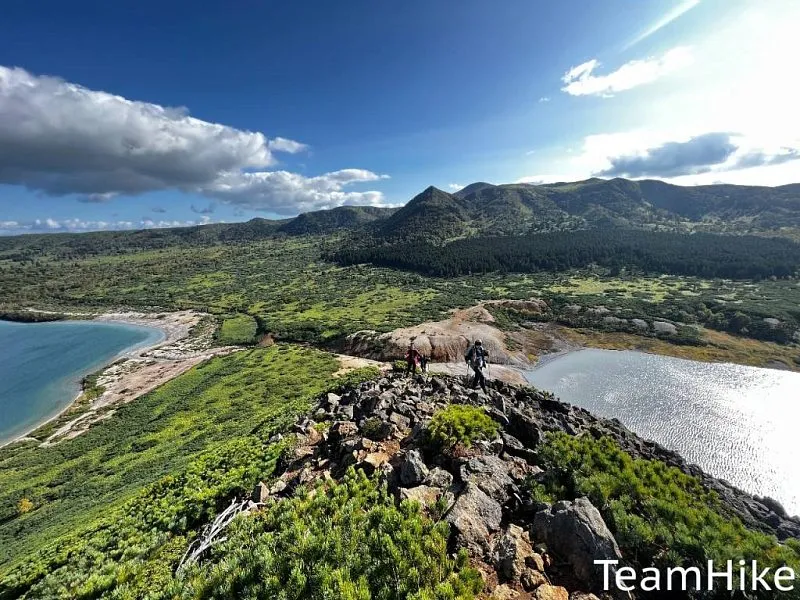
The route to the volcano's caldera is 7 km one way. You can hike it while observing the plants growing in the caldera, or travel by ATV. The hike takes about 2 hours one way.
Golovnin Volcano is also notable for its vegetation. On the inner slopes of the hills, you can see Erman's birches and fir forests, while at elevations above 150 meters, travelers may also encounter pure birch forests. Bamboo thickets, characteristic of the Kuril Islands, dominate the floor and summits of the caldera ridge. Alder and willow trees grow abundantly in the valleys along the rivers and streams.
Not many mammals live in this area, but more than 30 bird species can be found here. They include woodcocks, woodpeckers, cuckoos, bamboo warblers, nutcrackers, sea eagles, kites, and even the Japanese green pigeon.
Golovnin Volcano is the jewel of Kunashir Island! This unique landmark, with its lakes, lava domes, hot springs, scenic views, and dense forests, has attracted visitors and amazed them with its beauty for many years.