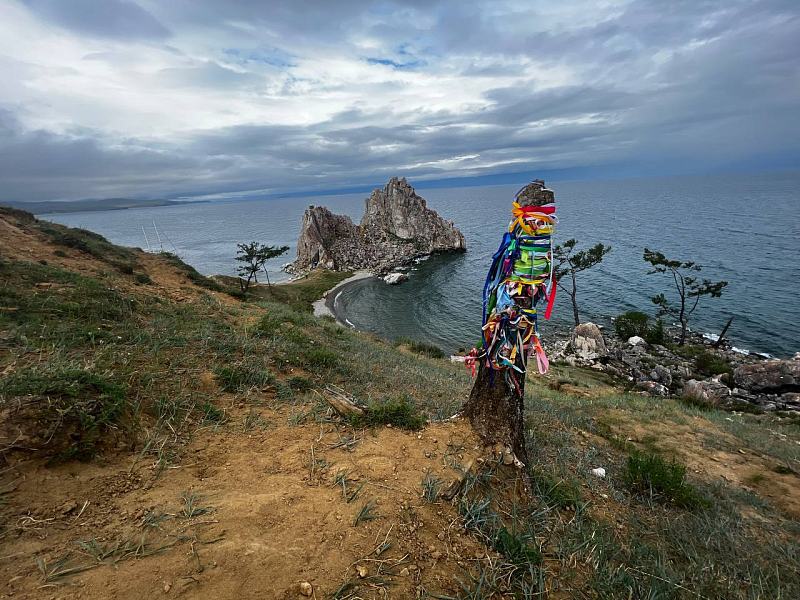
Lake Baikal winds
Wild Lake Baikal is famous for its winds. There are more than thirty types here. Valleys, river mouths, intermontane basins, and mountain ranges create numerous wind currents. Each has its own character and direction.

Lake Baikal winds
Verkhovik
Verkhovik is also known as the Angara. The second name is used more often in the northern part of the lake. In the south, this can cause confusion because the wind at the source of the Angara River is also called the Angara. The wind is named after the Upper Angara River valley, since it blows from the upper end of the lake. Strong gusts of Verkhovik are usually preceded by a bright red horizon before sunrise.
Verkhovik can blow across the entire lake at once. In summer, it rarely reaches the southern end of the lake, dying down near Tolstoy Cape, close to the settlement of Listvyanka. Verkhovik is especially fierce in December, before Lake Baikal freezes. The wind is not gusty and usually blows steadily. The weather it brings is dry and clear.
Verkhovik usually starts blowing in the morning after sunrise and often dies down by sunset, but it can continue without stopping for up to ten days. Because it lasts so long and has no gusts, Verkhovik can create very large waves. It is one of the most famous and powerful winds on Lake Baikal!
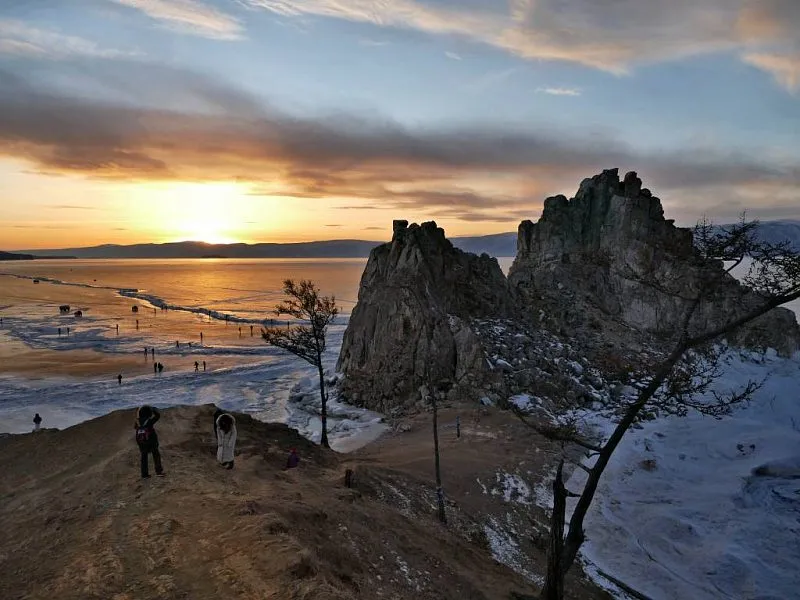
Sarma
Gusts of Sarma can reach 60 m/s, comparable to the speed of a Sapsan high-speed train (215-230 km/h). It can uproot trees, tear roofs off buildings like sheets of paper, and even sink ships! Sarma forms when air currents hit the Primorsky Range and, after crossing it, gain incredible speed on the way down toward Lake Baikal. The wind is most common in fall and winter. During these seasons, residents of the village of Sarma reinforce their roofs by tying them to the ground with ropes. Their settlement lies directly in the wind's path.
The Buryats have a legend about Sarma's origin. Long ago, Sarma was a female spirit who possessed a magic box that brought the waters of Lake Baikal to life when opened. The winds Barguzin and Kultuk competed for Sarma's heart, but she rejected them. In revenge, the unhappy suitors decided to steal the box. However, a fisherman named Olkhon found the hidden box, returned it to Sarma, and married her. Barguzin and Kultuk did not give up and declared war on Sarma and Olkhon. Instead of fanning the flames, Sarma suggested another solution: if anyone could catch her, she would become his wife. With that, Sarma turned into the wind, making any attempt effectively impossible.
The Buryats believe that Sarma begins to rage when Lake Baikal is deprived of something very valuable or otherwise harmed, for example, by pollution. This is not surprising: all the peoples living around Lake Baikal consider it sacred and alive.
Local residents are used to nature's sudden changes in mood, but for the unprepared, an encounter with fierce Sarma can end in tragedy. This has happened repeatedly throughout Lake Baikal's history. The most destructive tragedy occurred on the night of October 14-15, 1901. Sarma sank the steamship Yakov, which was towing three other vessels. The wind carried the vessels away, killing all 178 people on board: some died when the powerful wind slammed them against the hull, while others froze in the waters of Lake Baikal.
Shelonnik
Shelonnik blows mostly in fall, arriving from the vast steppes of Mongolia. This wind is often explained by cold air masses moving eastward through the mountain ranges. A gust of Shelonnik blows from the east and does not always reach the western shore. Even so, it creates steep waves that crash against the shore at full force. Wind speed is 8-10 m/s. Locals associate Shelonnik with the warmth it brings to southeastern and southern Lake Baikal.

Kultuk
Another name for this southwesterly wind is nizovik. When Kultuk blows, the weather turns overcast, with low clouds, and Lake Baikal becomes leaden gray, gloomy, and severe. In the northern part of Lake Baikal, this wind creates waves three meters high or more! Wind speed is 5-6 m/s in summer and 8-10 m/s in winter. Its warning signs are huge, dark clouds over the southwest of the lake.
Barguzin
Barguzin is a strong, steady northeastern wind. It can also be called Polunochnik, since Barguzin sometimes blows at night. This air current bursts out of the Barguzin Valley and heads toward Olkhon Island. Barguzin usually does not blow for more than a day. It most often starts after sunrise and dies down before sunset. This wind usually brings sunny weather. Wind speed is no more than 20 m/s, although it can reach hurricane force in Barguzin Bay.
Each wind on Lake Baikal has its own features, direction, and character. Winds can replace one another with the seasons, over the course of a day, or collide with one another. Valleys, river mouths, intermontane basins, and mountain ranges create numerous wind currents.