Tazheran Steppes
The Tazheran Steppes are a unique landscape on Lake Baikal, surrounded by striking natural features. Mineral lakes, numerous remnants of ancient mountain ranges, low mountains, and isolated rock formations create a one-of-a-kind landscape that attracts many travelers.
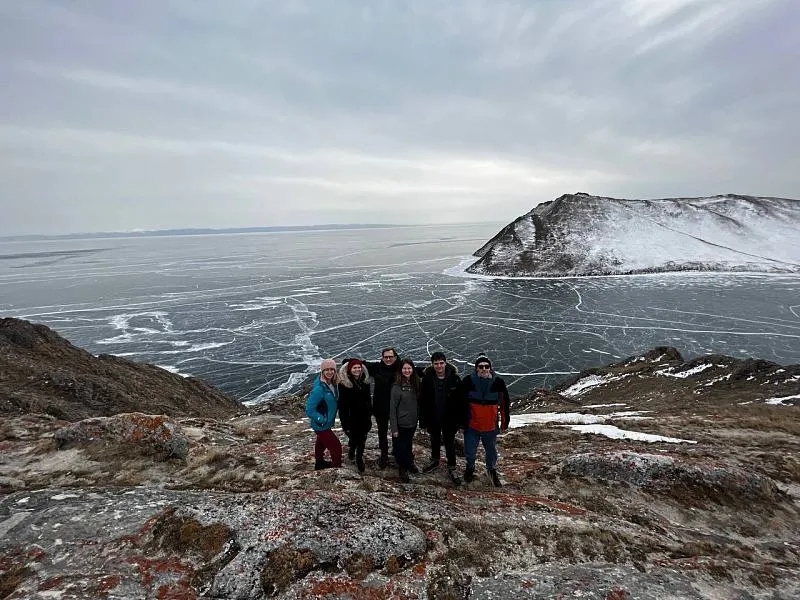
The Tazheran Steppes are a piece of Mongolia transported deep into the taiga around Lake Baikal. The steppes are more than 400 million years old. This unique natural area lies on the southwestern shore of Lake Baikal, in Irkutsk Oblast's Olkhon District. In Buryat, “Tazheran” means “sunny” or “a place for a summer camp.” The steppes' distinctive feature is their combination of rolling terrain, abundant rock remnants, and the sparse vegetation typical of steppe landscapes. Our Lake Baikal tour includes a visit to this unusual place.

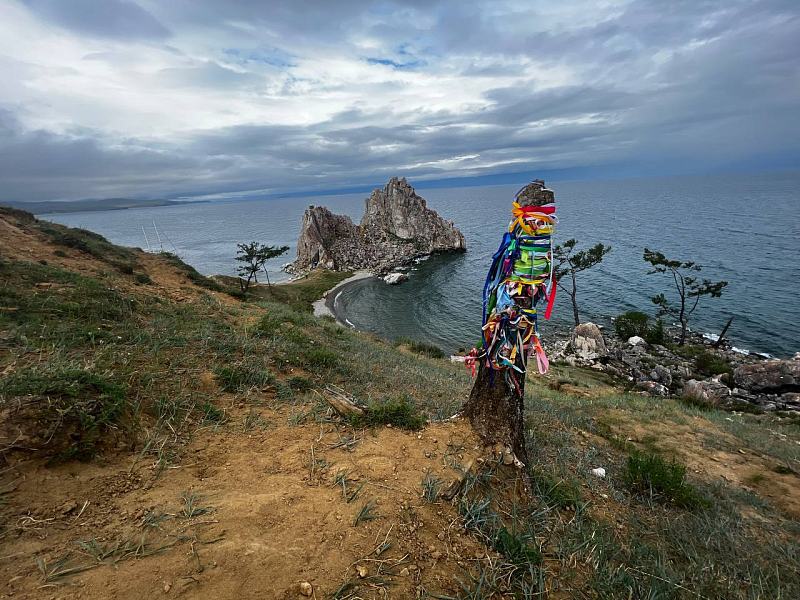
Ancient rock paintings, sites of shamanic rituals, ritual posts, and the scent of grasses: all these features of the Tazheran Steppes let you feel the spirit of nomadic peoples and the magical atmosphere of Lake Baikal. The scenery takes your breath away, while the endless open spaces give travelers a sense of freedom.
The highest point of the Tazheran Steppes is Mount Tan-Khan, at 990 meters above sea level. From its summit, you can enjoy a captivating view of Olkhon Island and the steppes themselves. Local people consider the mountain sacred and attach religious significance to it. It was once believed that powerful evil spirits lived on its summit, so only shamans were allowed to climb it.
To the south, the Tazheran Steppes border the Anga River, whose name means “an animal's mouth” in Buryat. As it descends from the Primorsky Range toward its mouth, the river forms a small mountain valley. From here, you get a spectacular view of Lake Baikal. To the west, the steppes are separated by the Baikal Range; to the north, by the Olkhon Gate Strait; and their western section reaches the shore of Lake Baikal.
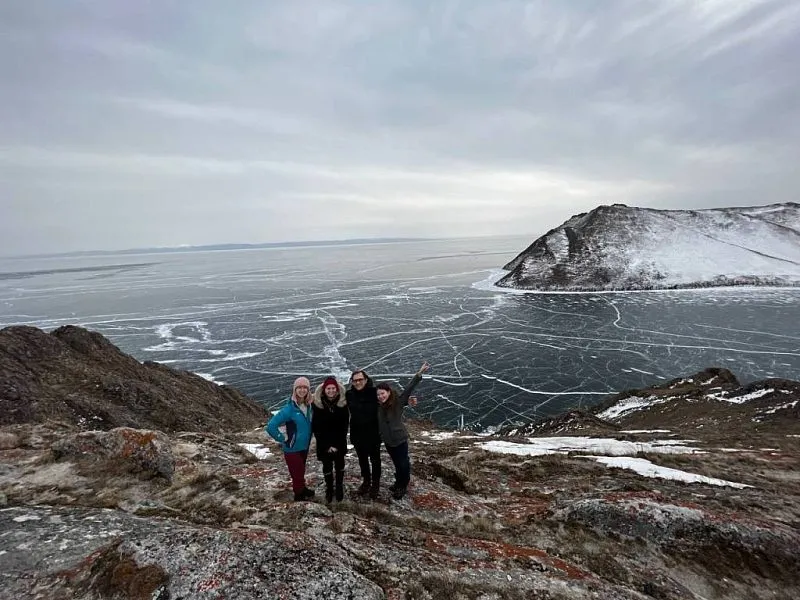
An interesting feature of the Tazheran Steppes is their mineral lakes, which form a chain running northeast through a longitudinal valley along the road at kilometers 93–95. The largest lake is Dabahtay-Nur, which means “salt lake.” These lakes are known for their healing properties and are used by local people for treatment. The unique natural complex is also known for its concentration of many rare and unusual minerals.
Despite the sparse vegetation, you can find relic plants here. Having survived the Ice Age more than 10,000 years ago, this area has preserved unique plant and animal species. They include three-leaved oxytrope, which is more than 15 million years old; preglacial endemics such as Ozersky milkvetch; and dwarf lilies, listed in the Red Data Book in many regions. The area is also home to the endangered Olkhon vole and the Siberian tube-nosed bat, which is listed in the Red Data Book.
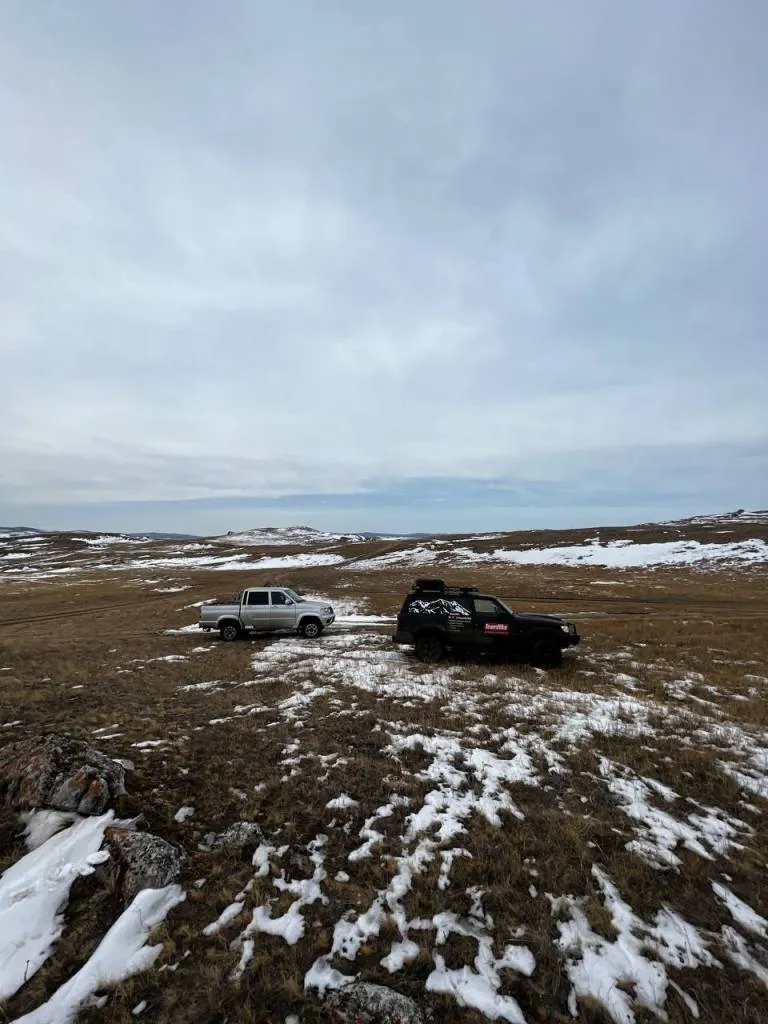
The Tazheran Steppes are a unique landscape on Lake Baikal, surrounded by striking natural features. Mineral lakes, numerous remnants of ancient mountain ranges, low mountains, and isolated rock formations create a one-of-a-kind landscape that attracts many travelers.