Shaman Rock
Shaman Rock is one of Lake Baikal’s most famous landmarks. Surrounded by legends and tales, it became a mystical palace for deities of different faiths, first shamanism and later Buddhism. Its striking beauty, history, and spiritual significance draw visitors to this sacred place.
Shaman Rock
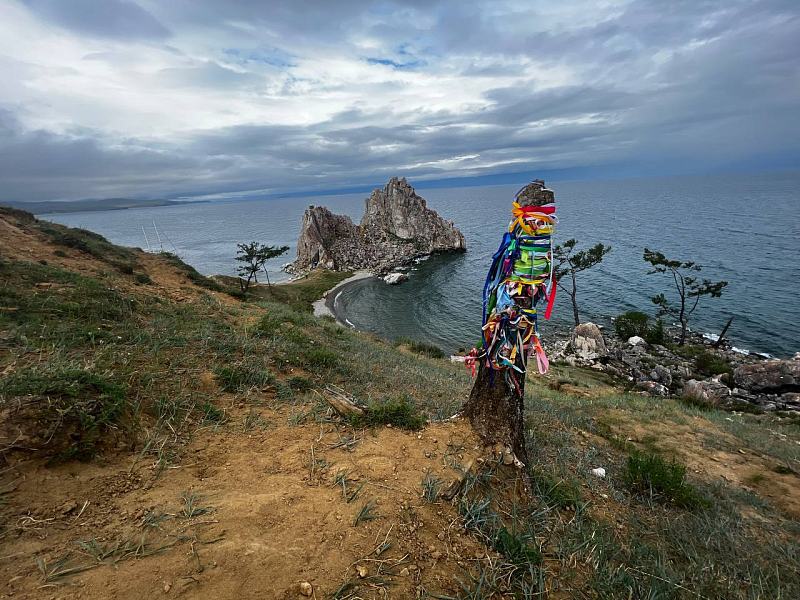
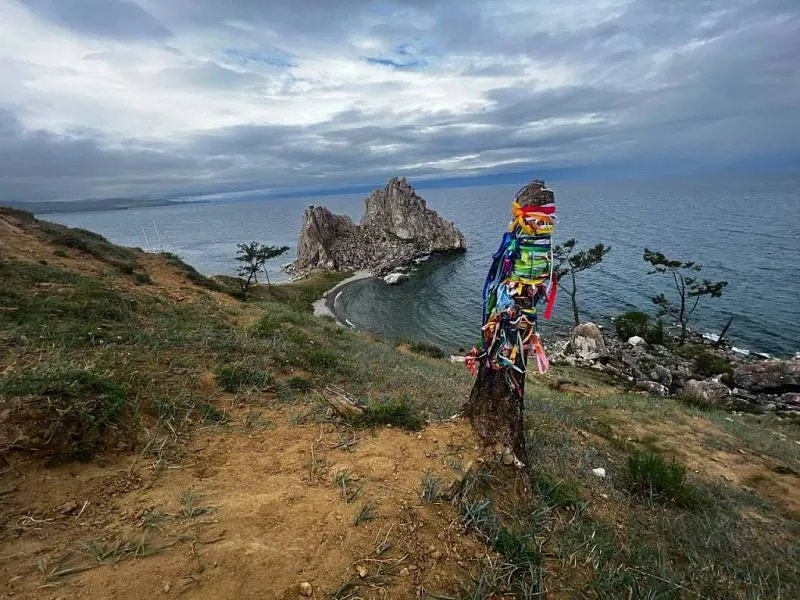
Cape Burkhan (or Shaman Rock) lies in the waters of Lake Baikal, in the middle of the western shore of Olkhon Island. According to legend, the fearsome and powerful spirit of Olkhon Island, Khan Khute-Baabay, lives here. Shamanism began in this place, and its first followers performed sacred rituals here, which is how the rock got its name. The rock is made of marble covered with red lichen and has two peaks, 30 and 42 meters high. A narrow isthmus connects the cape to the island before it extends out into the open water. Our Lake Baikal tour includes a visit to this mysterious landmark on Olkhon Island and one of Asia’s most important sacred sites.
Shaman Rock is near the village of Khuzhir, which you can read about in our article here. For centuries, ordinary people never settled near the sacred rock. To avoid angering the gods, women and children were never allowed near the Temple Rock, believed to be the home of evil spirits. No one but shamans had the right to approach this forbidden place. Today, many adventurous visitors can come close and go inside.
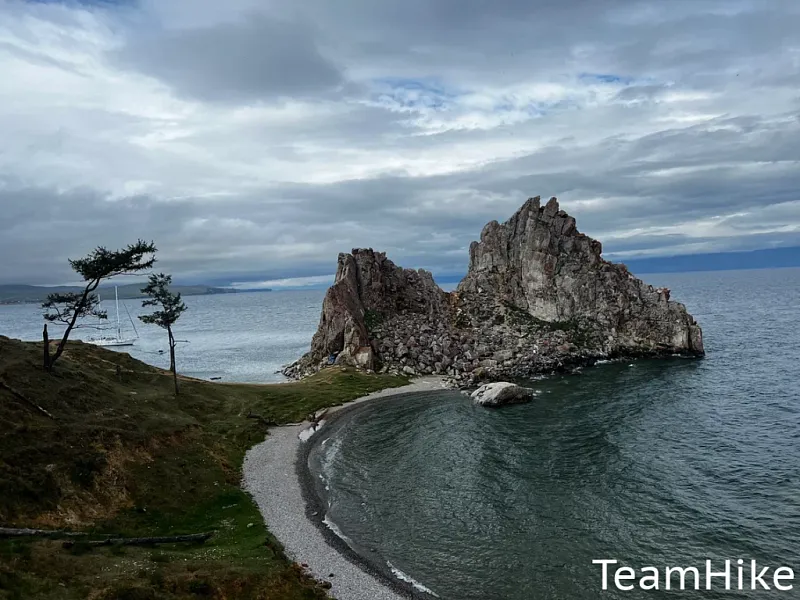
The scenic rock, with its two peaks, stands out for its natural beauty and imposing presence. The cape got the name Burkhan in the 17th century. Buryat Buddhists began using Burkhan to refer to Lake Baikal’s chief deity, and the rock was considered its dwelling place. The deity lived in the winding passage cave of Shaman Rock, which is now very popular with tourists. Shamanic rituals were once held there, and later a Buddha altar stood in the cave. The passage is about 12 meters long. It can be entered from either end. On the western side, a natural opening in the brown rock resembles a dragon.
Against the white marble on the rock’s southern side, you can see the image of a mythical serpent-dragon. A legend tells its story. A huge serpent, Abarga Mogoy, guarded the peace of Olkhon’s ruler, Khan Khute-Baabay. When the spirit moved to Cape Burkhan, the serpent king disappeared into the waters of Lake Baikal. Many years later, when people began disturbing the ruler’s peace again, the image of a serpent appeared here, symbolizing the sacred status of Shaman Rock.
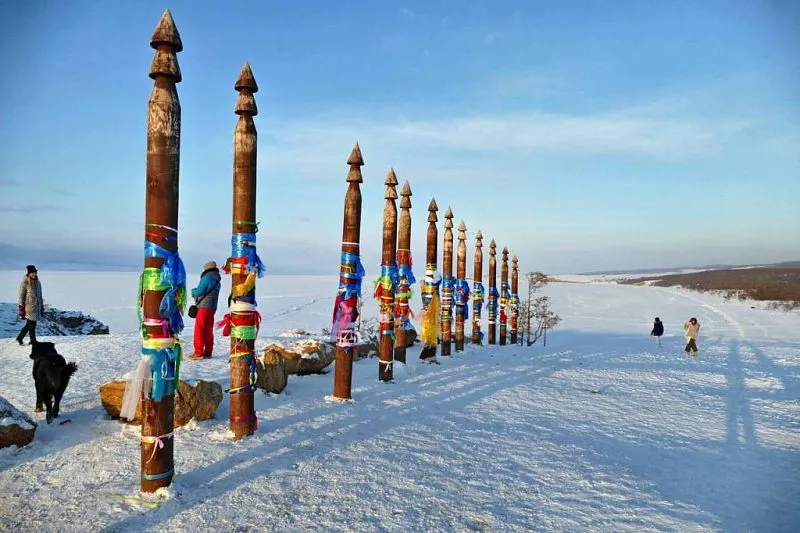
For many years, ancient shamans were cremated near the cape. Today, 13 ritual serge posts stand here, attracting millions of tourists every year. Each post has three carved rings, where pilgrims and tourists tie ribbons according to a strict hierarchy: for spirits, the living, and the dead. The ribbon’s color represents what you ask the spirits for. For example, people choose a green ribbon to pray for health and recovery. A red ribbon is tied to ask for feelings and love.
The cape is now a state-protected natural and historical monument. Among the historic features still visible on the rocks are ancient Tibetan graffiti. On a marble rock 150 meters from the cave, images of tambourines have been drawn; they are gradually disappearing. Researchers say they date back to the Neolithic period (5,000–3,000 years BC). Archaeological expeditions have been carried out here, uncovering an ancient settlement, more than a dozen Neolithic and Bronze Age burials, and many ancient objects, including a jade knife and axe, pottery fragments, and jewelry.
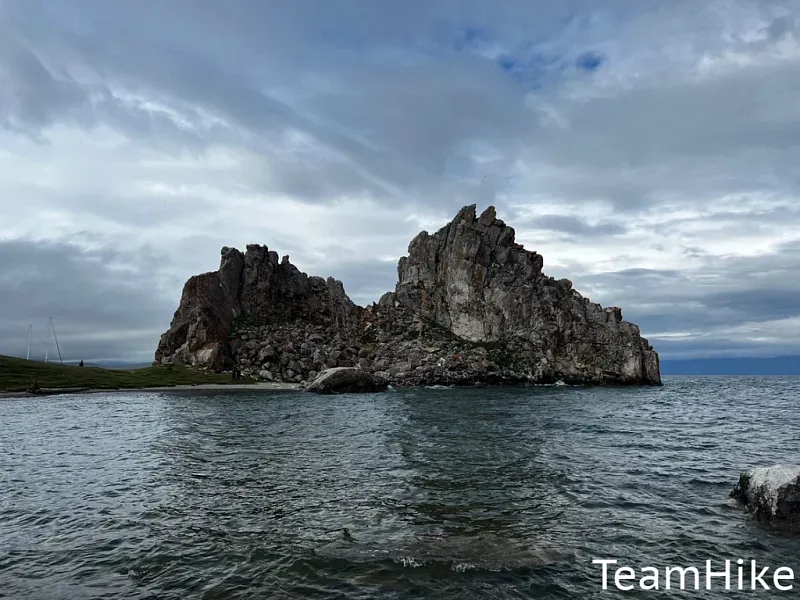
Shaman Rock is Lake Baikal’s calling card and one of the lake’s most famous landmarks. Surrounded by countless tales and legends, the rock has become a ghostly palace for deities of different faiths, first shamanism and later Buddhism. This sacred place draws visitors with its extraordinary beauty, history, and spiritual significance. Read more about other sights on Olkhon Island in our in-depth article here.