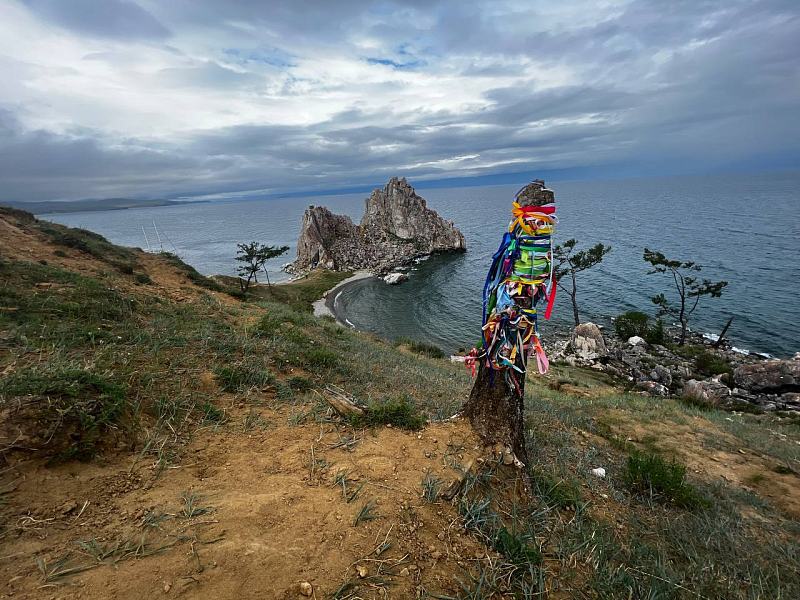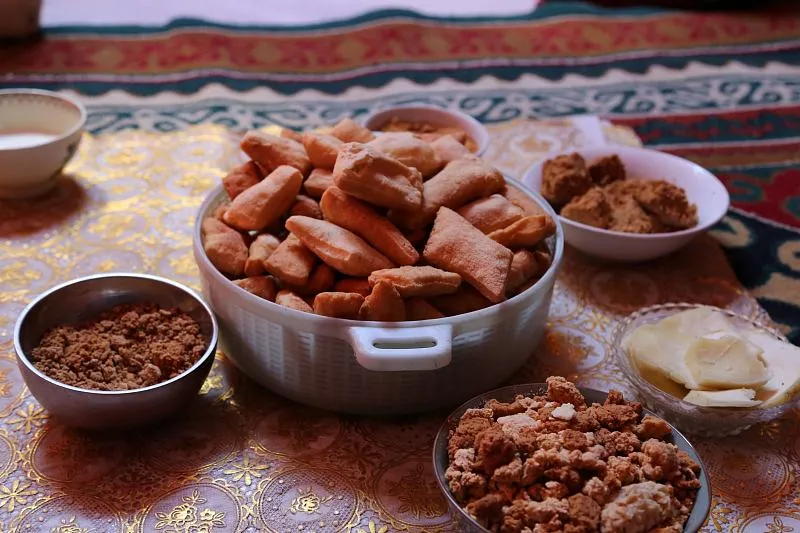
Ogoi
Ogoi is a mysterious Lake Baikal island and the largest of the islands in Maloye More (the Small Sea). The island became popular with tourists in 2005, after the Buddhist Stupa of Enlightenment was built here.
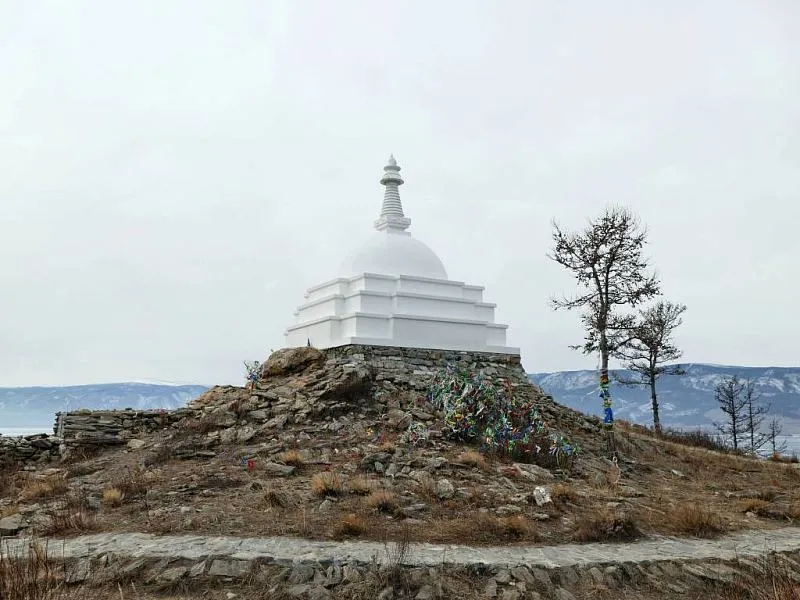
Ogoi Island
Amazing and mysterious Ogoi is the largest of the islands in Maloye More (the Small Sea). It is long and narrow, measuring 2.9 kilometers in length and up to 0.6 km in width. This place of power is mentioned in many legends and tales. Remarkably, the island has never been inhabited. Ogoi became popular with tourists only in 2005, after the Buddhist Stupa of Enlightenment was built here. Today, travelers from all over the world come to Lake Baikal and Ogoi Island to recharge with positive spiritual energy and cleanse themselves of negativity. Our winter tour of Lake Baikal also includes a visit to this remarkable place.

From above, the island's outline resembles a dancing woman. “Ogoi” means “waterless” in Buryat. The island was given this name because there are no water sources in this dry area: there is no spring or even a stream.
Ogoi is just a kilometer from Olkhon Island. In summer, you can reach Ogoi by motorboat or passenger boat; in winter, you can drive there across the ice. In winter, the island is known for its beautiful ice and picturesque ice grottoes.
On the island's southwestern side stands a striking natural landmark, Cape Dragon. The quartz cliff has an unusual shape that many people see as a dragon. In winter, the cape is covered with splash ice that freezes on the rocks. This unique Lake Baikal phenomenon is called “sokuy.”
Buddhist Stupa of Enlightenment
In 2005, an eight-meter-high sacred Buddhist Stupa of Enlightenment was built here. The island was already highly revered by local shamans before the stupa appeared. Yet, against their wishes and advice, a gleaming white stupa was built here in place of the old lighthouse. The Stupa of Enlightenment symbolizes the unity of the forces of nature, and each element of the structure is associated with a particular natural element.
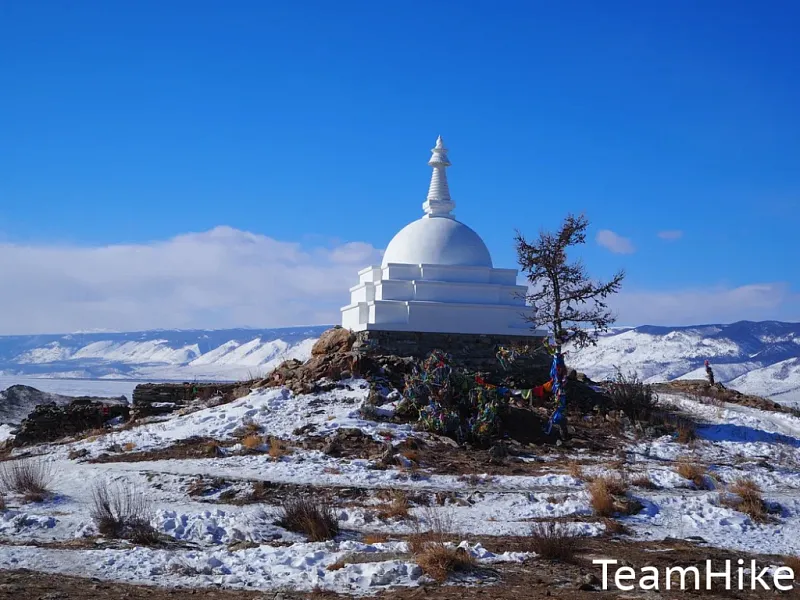
Inside the stupa are various Buddhist relics (sacred texts, the remains of saints, and objects they used) and a bronze statuette of the dakini Tromma Nagmo, who is considered the mother of all Buddhas in Tibetan Buddhism. It is known for certain that the stupa was built to preserve an extensive library of sacred Buddhist texts weighing about 750 kilograms in total. It contains the complete collection of the canonical Kangyur texts, teachings compiled from the words of the Buddha himself.
In addition to the library, the stupa holds about 2.5 tons of various mantras, as well as sacred Buddhist relics and substances. These include sacred substances of Shakyamuni Buddha (particles of hair and blood) sent by five Tibetan and Nepalese teachers. The stupa also contains the remains of 40 Bon tertons, fragments of their clothing and hair, and various minerals and shells from the oceans. Sacred earth from Jerusalem, Jordan, Egypt, Mexico, and various Christian sites in northern Russia and the Moscow Region is especially valuable. The collection also includes water from all the oceans, rusted aircraft bomb casings from World War I and World War II, millet, grain, buckwheat, and various sharp tools.
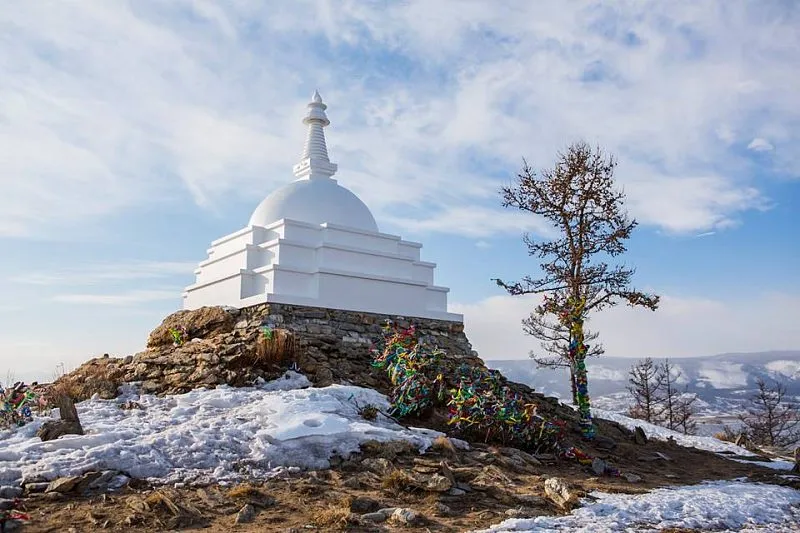
Buddhists believe that walking around the stupa brings spiritual merit. The more times you walk around it, the more likely it is that your wish will come true in this life.
The surrounding landscape creates an amazing atmosphere of freedom and detachment on Ogoi Island. The memories of visiting Ogoi Island and the Stupa of Enlightenment will stay with you for many years.