Gorkhi-Terelj National Park, Mongolia
One of Mongolia’s most scenic national parks, known for its striking landscapes and strangely shaped rocks
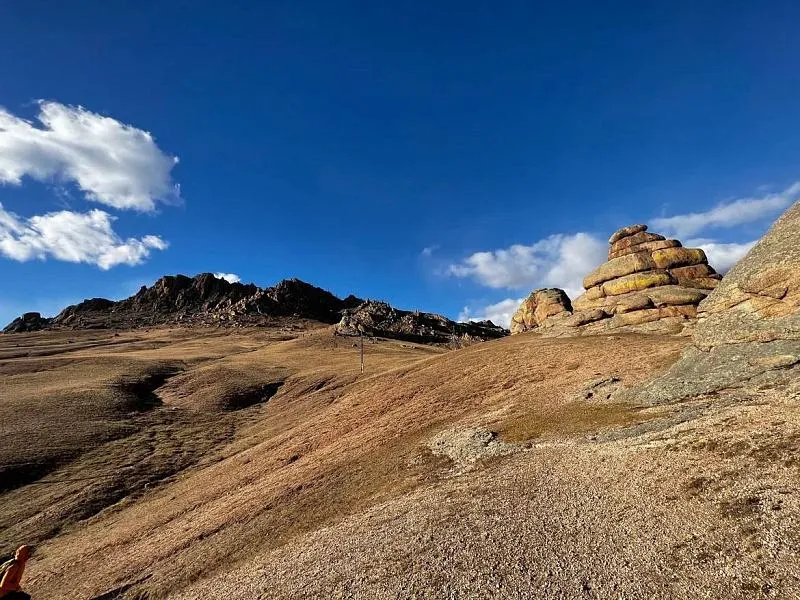
Tours to Mongolia are becoming increasingly popular with Russian travelers. We’ve been introducing visitors to this distinctive country since 2016, and we make a point of visiting Gorkhi-Terelj National Park (literally, “Rhododendron Stream”). It’s one of Mongolia’s most scenic national parks, located 65 kilometers northeast of Ulaanbaatar. Gorkhi-Terelj became a national park in 1993; before that, it was part of the Khan Khentii Strictly Protected Area.
The park covers about 300,000 hectares. Its landscape includes mountain ranges, deciduous and coniferous forests, valleys, mountain meadows, and vast steppes. Terelj Park draws many travelers on tours to Mongolia with its distinctive mountain and steppe scenery.
Locals say the nature here has healing properties, and that its beauty captivates you and won’t let go. Gorkhi-Terelj is home to many mountain rivers and streams, as well as 50 species of mammals (including deer, wolves, lynxes, and brown bears) and 250 species of birds, many of which are found only in this area.
What to see in the park?
Unusually shaped rocks
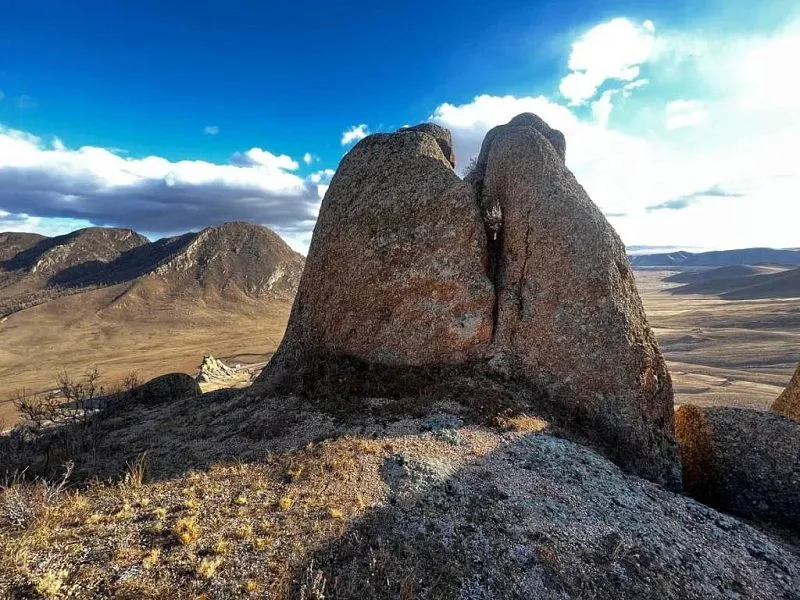
Gorkhi-Terelj National Park is known around the world for its unusually shaped rocks, which the imagination can turn into all kinds of creatures. There’s a sleeping dinosaur, a hare, and a person with a book. The rocks’ unusual shapes were formed by erosion.
Melkhii Khad (Turtle Rock)

The giant turtle Melkhii Khad is the park’s most famous rock formation and its symbol. It attracts not only plenty of tourists, but also numerous film crews. The rock looks like a giant turtle crawling onto the road. It’s 24 meters tall! Besides Turtle Rock, there’s Father Rock, the 100 Lamas Cave, and Lama Rock.
Aryabal Buddhist Temple
The temple is located a few kilometers from Turtle Rock. It is one of Mongolia’s three well-known meditation centers. The monastery was completely destroyed in the 1930s and restored to its historic appearance in 2007. The unique temple is shaped like an elephant’s head, one of the main figures in Buddhism. A path leads from the gate to the temple, with boards displaying Buddhist quotations along the way. A staircase of 108 steps, built in the shape of an elephant’s trunk, leads to the temple itself. The temple is built in the Tibetan style and decorated with colorful patterns and carvings. Inside, the building is filled with paintings, statues, and Buddhist relics. Services are held here regularly. Aryabal Temple is a place of remarkable energy and natural beauty!
Dinosaur sculpture park
With the help of paleontologists, a dinosaur sculpture park was created, populated by stone statues of these ancient creatures that visitors can pose with for photos. The sculptures are located on the grounds of the Dinosaur tourist camp.
Khentii Mountains
The Khentii Mountains, in the northern part of the national park, are one of Mongolia’s true treasures. The range stretches 160 km to the Siberian border. The Khentii Mountains are home to 50 species of mammals, more than 250 species of birds, and 1,200 plant species. High-mountain Arctic tundra, coniferous taiga along the northern slope, Siberian steppes, forests, and valleys all await travelers here. The Khentii Mountains are a true gem of Mongolia!
Gorkhi-Terelj is also home to attractions such as the glacial Lake Khagiin Khar, which is 20 meters deep, and a wooden bridge over the Tuul River. A large tourist area with cafes and hotel complexes is located in the southern part of the park.
Join our tours to Mongolia!