Kinderlinskaya Cave
Kinderlinskaya Cave is one of the most majestic, beautiful, and fascinating caves in the Urals. Its vast chambers and stunning formations, including stalactites, stalagmites, and picturesque flowstone, draw visitors from far and wide.

Kinderlinskaya Cave
Kinderlinskaya Cave (named for the 30th Anniversary of Victory, also known as Victory Cave) is a unique natural monument in the Republic of Bashkortostan, near the village of Tash-Asty. It is considered the best-known and longest cave in the Ural Mountains, attracting visitors from across Russia and around the world. The cave has several levels and measures 8,130 meters in total length and 215 meters deep. As soon as you step inside, you can feel the wonder and mystery that surround and inspire you. To find this famous place, look on the right slope of the valley of the small Kinderlya River, which gave the cave its name. The Kinderlya flows into the Zilim River. Better yet, join our river rafting trip on the Zilim River, where we introduce visitors to mysterious Kinderlinskaya Cave.
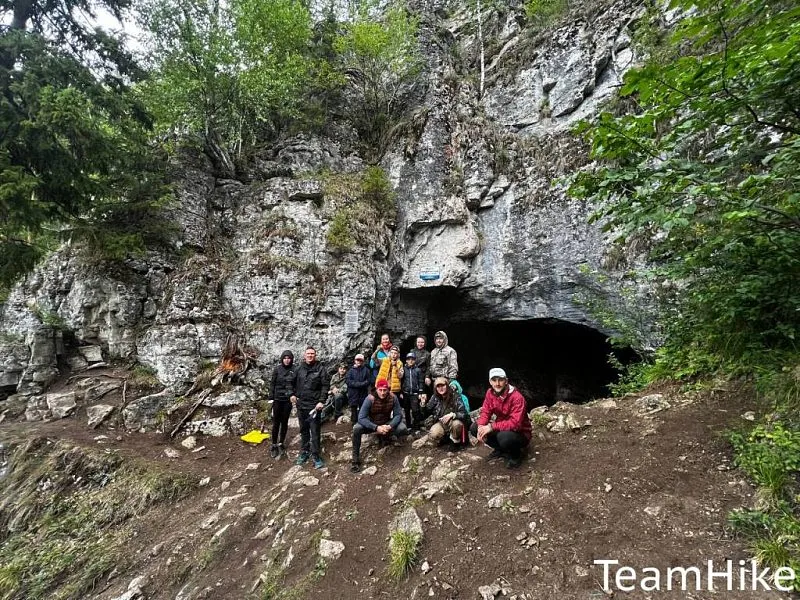
The cave entrance is 95 meters above the Zilim River. The route begins with a descending passage that leads to a grotto with a flat floor and a width of 15 meters. The cave has 4 levels, with many spacious chambers and vaults, grottoes, and passages. Cavers have given some of the grottoes unusual names based on their appearance: Flying Dutchman, Pepsi, Bread Slicer, Atlantis, Concert Hall, Koschei's Kingdom, and more. In the Pepsi-Cola chamber, for example, the walls are covered with colorful formations, while clay spread across the floor of the Chocolate Bar Gallery looks like a chocolate bar. The Flying Dutchman Grotto got its name because its icy ceiling resembles a ship's keel.
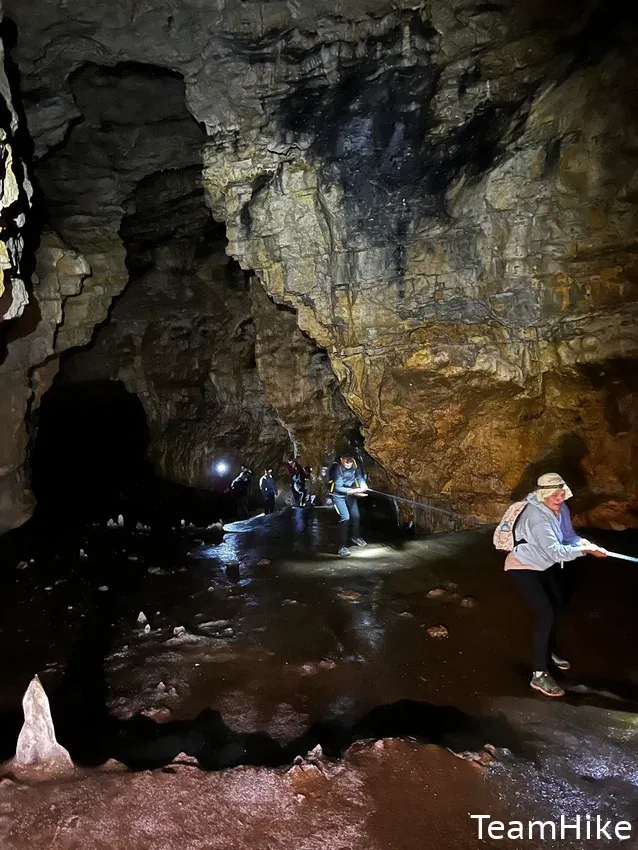
The cave passages average 5.4 meters wide and 7.1 meters high. Kinderlinskaya Cave is divided into numerous crawlways and galleries that connect the underground chambers. Ropes are fixed along the cave floor to help keep visitors safe and make it easier to descend and climb back up. Without professional equipment, you can explore only a small part of Kinderlinskaya Cave.
In the past, hunters used the cave to store meat. Cavers first explored Kinderlinskaya Cave in 1974. Cavers from Sterlitamak surveyed 2,443 meters of the cave. Members of the Bashkir Regional Caving Section continued the exploration from 1975 to 1977. The cave's other name, Victory Cave, commemorates the fact that it was surveyed in the year marking the 30th anniversary of victory over Nazi Germany.
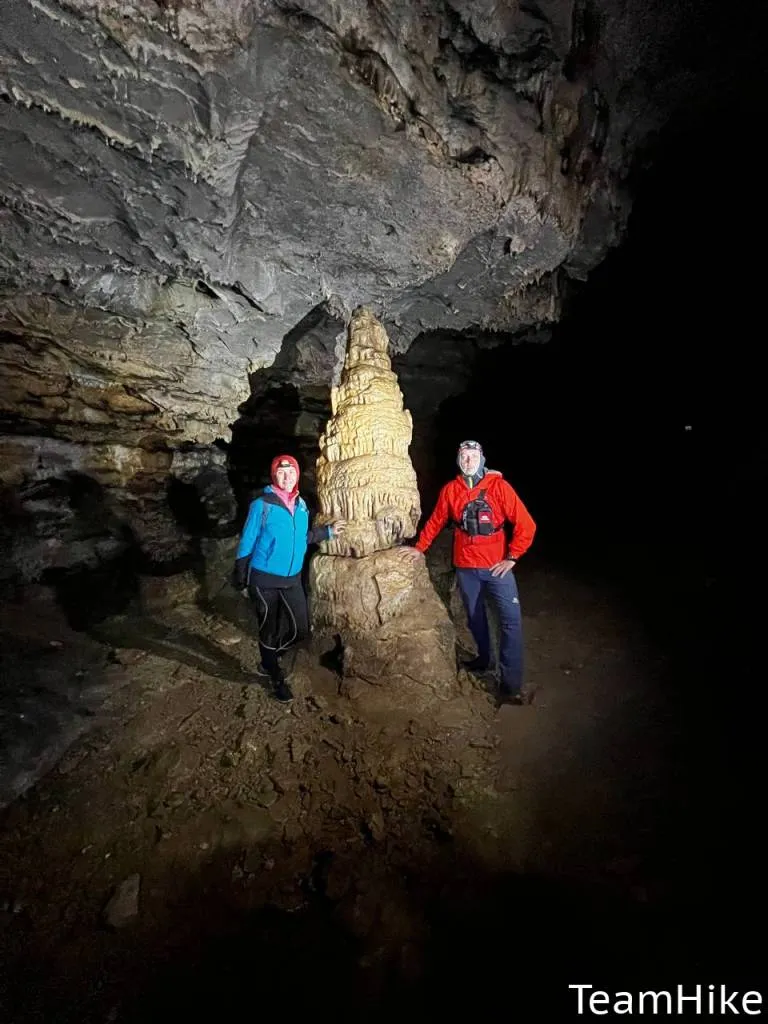
Kinderlinskaya Cave is known for its spectacular, history-rich stalactites, stalagmites, and flowstone formations. It also has underground lakes edged with coral-like formations, whose water levels constantly change, as well as rivers, shafts, and squeezes (very narrow, hazardous cave passages). There is also a small underwater section, explored for 230 meters.
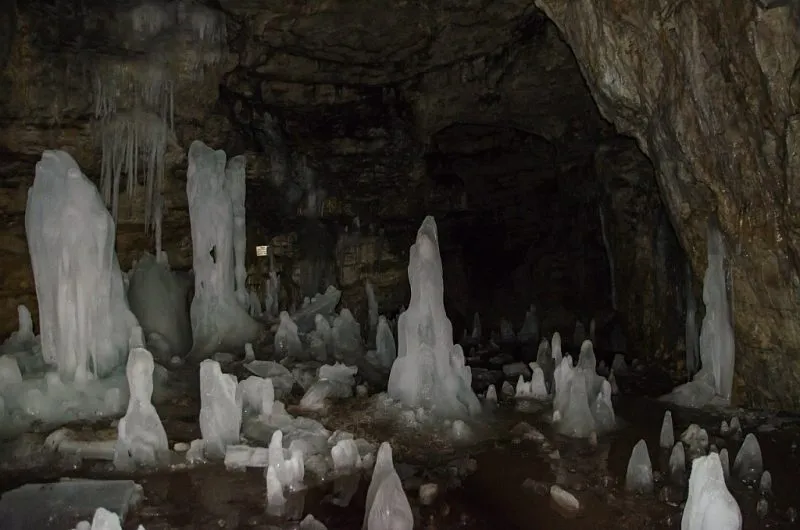
The largest cave glacier in Bashkortostan lies near the entrance. It fills an entire gallery that is 12 meters wide and stretches 120 meters in length. This is the coldest part of the cave. In recent years, the glacier has gradually begun to melt. In ancient times, it served as a trap for animals, and many fossilized bones can still be found at the bottom. A mammoth calf's tooth was even found in the clay in the gallery beyond the glacier. Near the glacier is a 15-meter-deep ice shaft. Keep your distance: the ice is very thin at the edges, and you could fall into the icy shaft.
The chamber with the glacier stays at –12 C° year-round. Elsewhere in the cave, the temperature averages between +5 and +8 degrees throughout the year, regardless of the season.
In 2010, members of a hiking club in Ufa installed a barrier at the cave's first squeeze, known as the Vacuum Cleaner, closing off part of the cave to visitors. This was done to help stabilize the cave's ecological conditions. The first section of the cave remains open to visitors.
Kinderlinskaya Cave is one of the most majestic, beautiful, and fascinating caves in the Urals. Its vast chambers and stunning formations, including stalactites, stalagmites, and picturesque flowstone, draw visitors from far and wide.