Bukhara
Bukhara, an ancient city in Uzbekistan, is a unique blend of history, architecture, and culture. Its sights and rich history make it a popular destination for travelers from around the world.
Bukhara
Bukhara, located in Uzbekistan, is one of the oldest cities in Central Asia. Its history stretches back more than two thousand years. The city was founded in the 1st century CE and became an important trading and cultural center on the Great Silk Road. Its location on the route made Bukhara a hub for trade and the exchange of ideas between East and West. On our tour of Uzbekistan , we show travelers the ancient city's most iconic and beautiful sights.
Bukhara's history is closely tied to that of Persia. At different times, it was part of several Persian empires, including the Achaemenid, Sasanian, and Samanid empires. Persian influence can be seen in Bukhara's architecture, art, and culture.
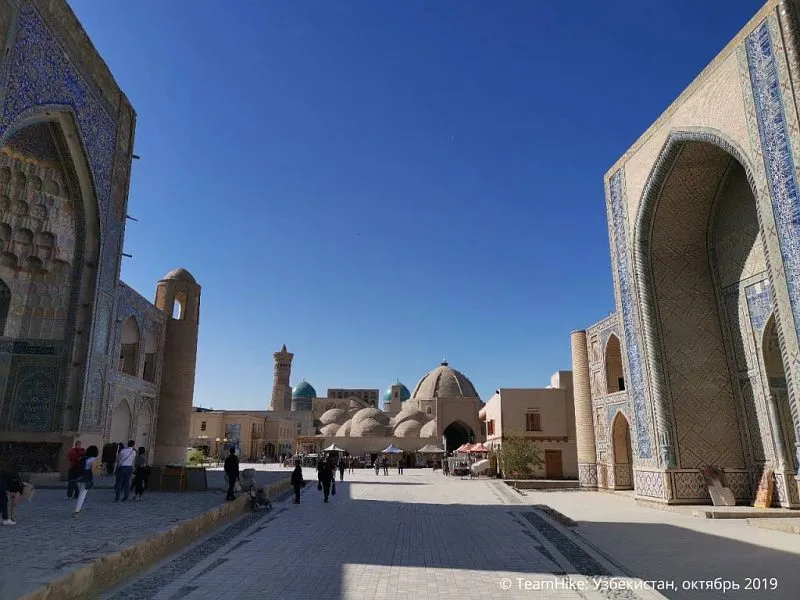
Bukhara is considered one of the cultural and intellectual centers of the Islamic East. Science, philosophy, literature, and the arts flourished here. Many scholars, poets, and philosophers came from Bukhara, and their contributions to Islamic culture were significant.
Bukhara's old town is a living museum of history, drawing visitors with its ancient atmosphere and distinctive character. It is home to many historic monuments recognized as UNESCO World Heritage Sites.
Po-i-Kalyan complex
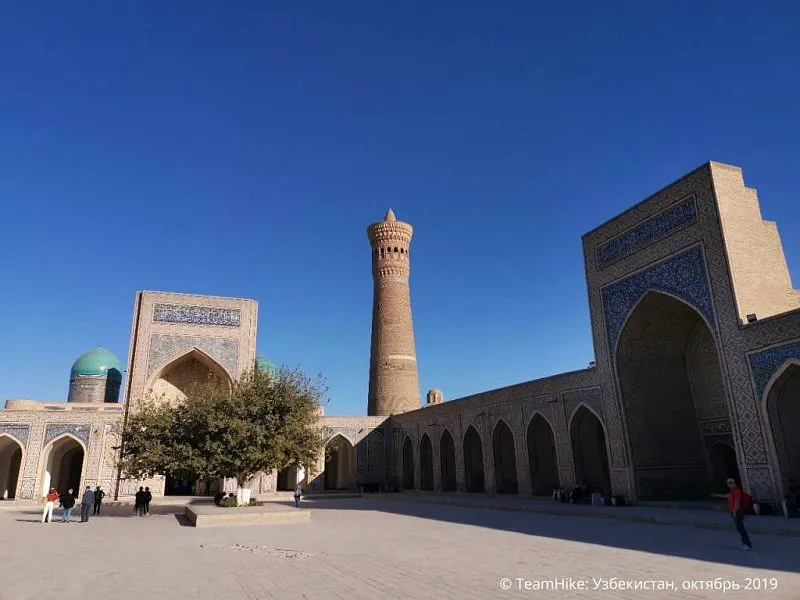
One of the best-known sights is the Po-i-Kalyan complex, which means “at the foot of the Great One.” It includes the Kalyan Minaret, Kalyan Mosque, and two madrasas facing each other: Mir-i-Arab and Amir Alim Khan. The architectural ensemble was built between the 12th and 16th centuries.
The Kalyan Minaret is a magnificent tower about 47 meters tall and a symbol of Bukhara. Inside, a staircase leads to a viewing platform with beautiful views of the city. The complex is also home to Kalyan Mosque, one of the largest mosques in Central Asia, built in the 16th century. Its grand arches and domes are strikingly beautiful.
The historic Mir-i-Arab Madrasa was built in the 16th century. It served as a center for education and religious study, where students studied Islamic theology, philosophy, and other subjects. The madrasa's beautiful architecture features domes, arches, and ceramic decorations.
Ark Fortress
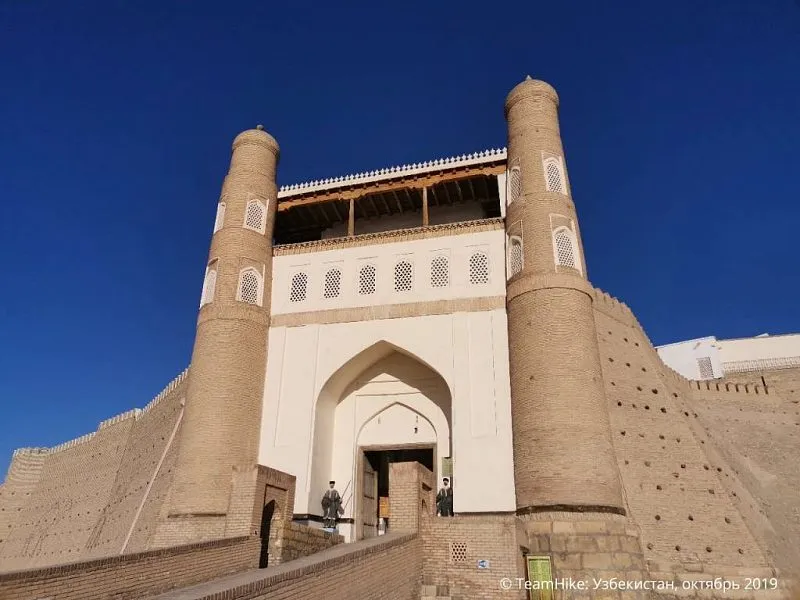
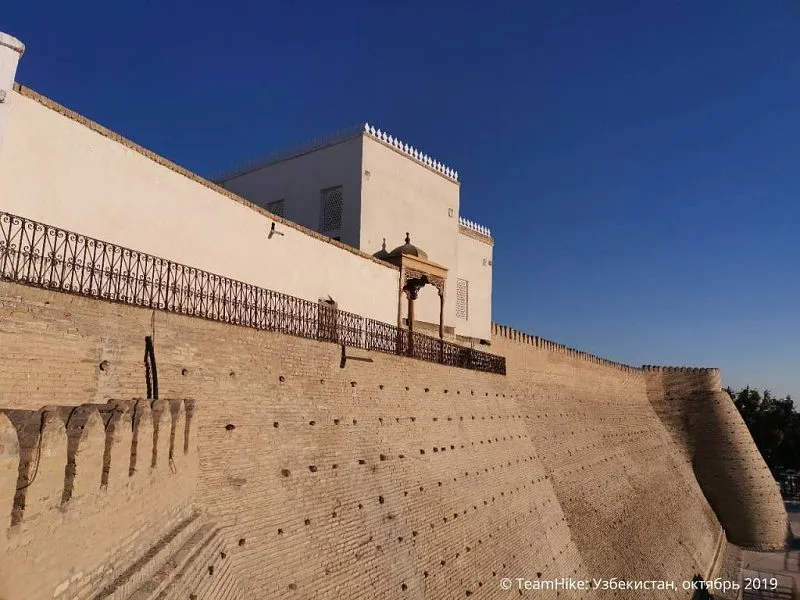
Another popular sight is the ancient Ark Fortress, which served as the residence of Bukhara's rulers. Built in the 5th century, the fortress was the center of the city's political and cultural life. Its colors include various shades of ochre and red. The stones used in its construction create a distinctive palette that reflects Bukhara's ancient history and culture. Inside the fortress are palaces, mosques, audience halls, and other buildings. The citadel stands about 20 meters tall, giving it a commanding presence above the city. Visitors can explore the history and beauty of this ancient fortress, take in its atmosphere, and enjoy magnificent city views from its platforms.
Summer residences
Besides its old town, Bukhara is known for its country summer residences. One of the best-known is the Sitorai Mokhi-Khosa Palace, built in the 19th century. It is a fine example of the architecture and design of its time, decorated with artistic frescoes, painted designs, and exquisite woodwork.
Another summer residence worth visiting is the Emir of Bukhara's Palace, 12 kilometers east of Bukhara. Built in the 19th century, it served as a residence for Bukhara's rulers. It stands out for its luxury and beauty, with magnificent palace halls, gardens, and fountains.
Chor Minor Madrasa
Chor Minor Madrasa is a unique landmark in Bukhara. Built in the 19th century, it is one of the city's most recognizable architectural sights. “Chor Minor” means “four minarets” in Uzbek, and this architectural feature is what makes the madrasa special.
Chor Minor Madrasa stands out for its unusual design, with four tall minarets at the corners of the building. Each minaret has its own architectural form and decorative details, giving the madrasa a distinctive look. The minarets are decorated with floral motifs, geometric patterns, and ceramic tiles.
The history of Chor Minor Madrasa is closely tied to the history of Bukhara. It was built in 1807 by Najaf Quli Beg, a local ruler who wanted to create a unique place of learning for young people. Construction was halted after Najaf Quli Beg's death, and the madrasa was never completed. Today, a museum inside displays objects and artifacts that tell the story of the region's history and culture.
Samanid Mausoleum
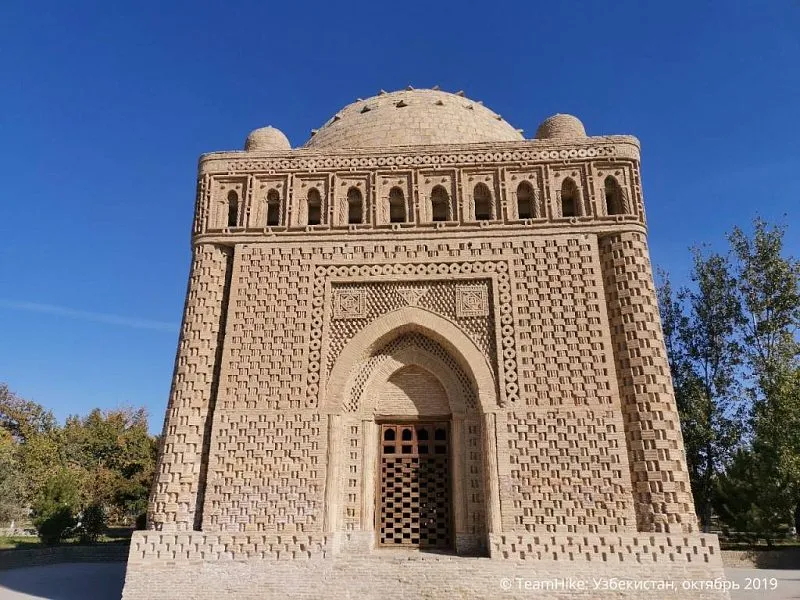
Built in the 9th century, it is one of the earliest examples of Islamic architecture in Central Asia. The mausoleum was built as a burial place for the rulers of the Samanid dynasty. It is impressive for its elegant architecture and refined details. The building is square and has two levels. A dome decorated with intricate geometric patterns sits on the upper level. Inside is a burial chamber where members of the Samanid dynasty were laid to rest.
The Samanid Mausoleum is renowned for its stone carvings and distinctive architectural details. Its facades are decorated with elegant arches, columns, and ceramic patterns. Every detail is crafted with great skill and is a fine example of Islamic art. At the mausoleum, visitors can admire the building's intricate details and learn about the important role the Samanid dynasty played in the region's history.
Local markets
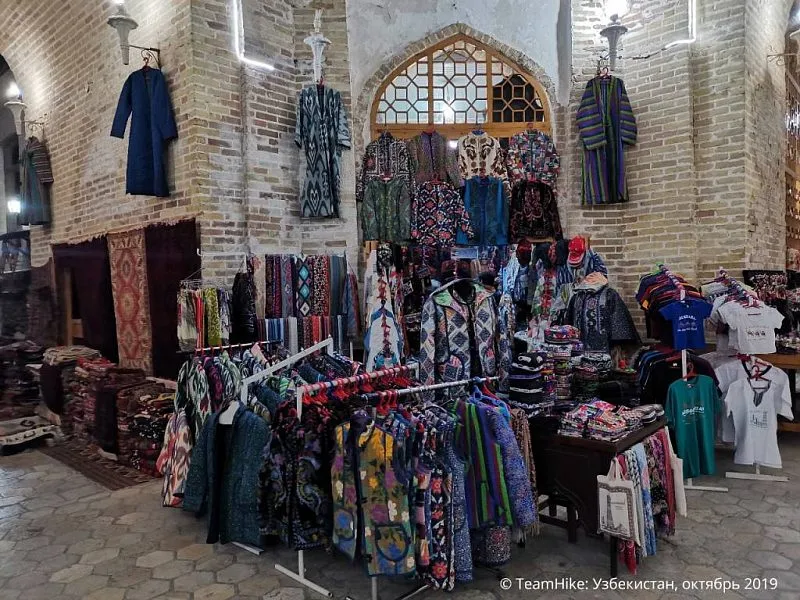
Bukhara's old markets offer a wide range of goods that reflect the ancient city's rich culture and traditions. You can find everything from fresh fruit and vegetables to spices, souvenirs, and textiles. Local markets are known for their artisans, who sell unique goods such as carpets, silk products, jewelry, and ceramics. Travelers often buy traditional headwear, as there is a wide selection of tubeteikas (embroidered skullcaps). The markets are also home to many cafes and restaurants where you can try traditional Uzbek dishes.
Medieval bathhouses
Medieval bathhouses, known as hammams, were important in Bukhara and played a major role in social and cultural life. Bathhouses dating from the 15th and 16th centuries still stand in the old town. Hammams were not only places to bathe and relax, but also places where people gathered, shared news, and discussed business.
Bukhara's hammams are known for their distinctive architecture and design. Inside, they are divided into separate areas for men and women. They include steam rooms, various lounges, pools, and ceramic and mosaic decorations. This authentic landmark offers a glimpse into everyday life in the East at that time.
Bukhara is a unique blend of history, architecture, and culture. Its sights and rich history make it a popular destination for travelers from around the world.